
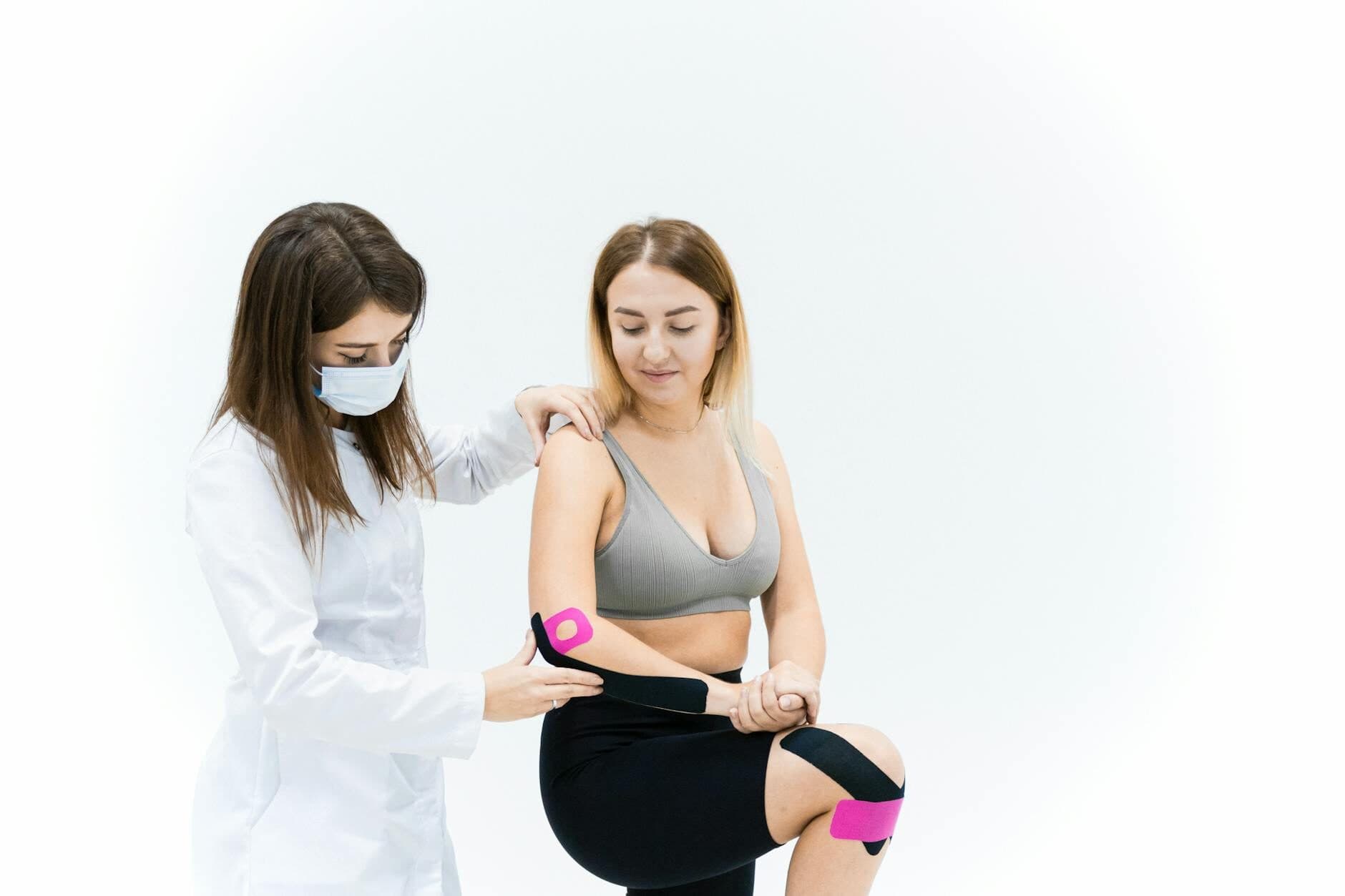
Sports Injury Prevention with Physiotherapy in Amsterdam
Amsterdam is a city built for movement. From the cycling commutes that clock up tens of kilometres before breakfast, to the football pitches of Amstelpark, the trail runners threading through the Amsterdamse Bos, and the open-water swimmers in the Sloterplas — active living is woven into daily life here. That vitality is worth protecting. Sports injuries rarely announce themselves in advance, but they almost always follow a pattern: a gap between what the body is being asked to do and what it is currently prepared to handle. Physiotherapy’s role in prevention is to close that gap — systematically, specifically, and before something goes wrong.
At Alter Physio & Acupuncture in Amsterdam Zuid, we approach prevention the same way we approach treatment: by looking at the whole system. Pain and injury are seldom isolated events. They emerge at the intersection of movement quality, tissue load, nervous system state, and recovery capacity. Understanding that intersection is where genuine prevention begins.
Why Sports Injuries Happen — and Why Prevention Is More Than Stretching
Most sports injuries fall into one of two broad categories: acute trauma (a sudden force the tissue cannot absorb — a torn ligament, a muscle strain) and overuse injury (cumulative load that exceeds the tissue’s capacity to repair — tendinopathy, stress fractures, bursitis). In both cases, the underlying question is the same: was the body prepared for that demand?
Common contributing factors include:
- Training load spikes — increasing volume or intensity too quickly, giving connective tissue insufficient time to adapt.
- Movement inefficiency — compensatory patterns that concentrate stress on one structure rather than distributing it across a kinetic chain.
- Inadequate recovery — insufficient sleep, poor nutrition, or chronic stress that keeps the nervous system in a state of low-grade activation, slowing tissue repair and heightening pain sensitivity.
- Muscle imbalances and mobility restrictions — asymmetries that alter joint mechanics and increase injury risk during high-speed or high-load movements.
- Previous injury — incompletely rehabilitated tissue and residual movement adaptations that persist long after pain has resolved.
A thorough physiotherapy assessment maps these factors for the individual athlete. There is no universal prevention programme that works for everyone; the variables differ between a masters cyclist, a recreational footballer, and someone returning to running after a knee procedure. If you are unsure whether your current training approach carries hidden risks, this guide on when to see a sports physiotherapist is a useful starting point.
The Role of the Autonomic Nervous System in Injury Risk
One dimension of sports injury prevention that is often underappreciated is the state of the autonomic nervous system (ANS). The ANS governs the balance between sympathetic activation — the alert, mobilising state associated with exertion and stress — and parasympathetic activity, the restorative state that drives tissue repair, immune function, and neuromuscular recovery.
When an athlete is chronically under-recovered — through overtraining, poor sleep, or sustained psychological stress — the ANS tilts toward sympathetic dominance. In this state, reaction times can suffer, proprioception (the body’s sense of joint position) becomes less reliable, and the threshold for tissue damage lowers. In short, the nervous system becomes less able to protect the body during dynamic, unpredictable movement.
Practically, this means that recovery is not passive — it is a trainable and measurable quality. Heart rate variability (HRV), the variation in time between heartbeats, is a clinically useful proxy for ANS balance. Athletes with higher HRV tend to recover faster and sustain fewer overuse injuries. The following approaches can support ANS regulation as part of a broader prevention strategy:
- Structured breathing practice — slow, diaphragmatic breathing (inhale for 4–5 seconds, exhale for 6–8 seconds) activates the vagus nerve and shifts the system toward parasympathetic tone. The 4-7-8 technique mentioned in our original overview is one well-known version.
- Sleep hygiene — the majority of tissue repair and motor pattern consolidation occurs during deep sleep. Consistently sleeping fewer than seven hours has measurable effects on injury risk and performance.
- Nutritional adequacy — adequate protein intake (to support tissue remodelling), sufficient carbohydrate availability around training, and micronutrients including vitamin D and magnesium all influence recovery capacity.
- Mindfulness and load monitoring — brief mindfulness practice and honest tracking of training load (using RPE scales or HRV apps) allow athletes to make better-informed decisions about when to train hard and when to ease back.
These are not soft additions to a programme — they are evidence-informed components of sustainable athletic performance.
How Physiotherapy and Japanese Acupuncture Support Prevention
At Alter Physio & Acupuncture, prevention programmes are built around a detailed movement assessment that looks at how you load your joints, where your compensations are, and what your training history tells us about your risk profile. From that foundation, we draw on several complementary approaches.
Movement and Load Assessment
We assess functional movement patterns — how you squat, hinge, rotate, land, and decelerate — because these are the contexts in which injuries happen. Where we find restriction, compensation, or asymmetry, we work to understand why: is it a mobility issue, a motor control issue, a strength deficit, or a combination? The intervention follows the finding, not a generic template.
Targeted Strength and Neuromuscular Training
Strength training — when properly dosed and progressively loaded — is one of the most robustly supported injury prevention tools available. For runners, this often means eccentric loading of the calf complex and hip abductors. For footballers, the Nordic hamstring curl has a strong evidence base for reducing hamstring strain risk. For cyclists, hip stability and thoracic mobility work can reduce the likelihood of knee and lower back problems developing over long rides. The specifics depend on you, your sport, and your assessment findings. For a broader overview of injury patterns we commonly see, see our guide to 5 common sports injuries in Amsterdam and how to prevent them.
Japanese Acupuncture
Japanese acupuncture, as practised at our clinic, uses fine needling to address tension patterns, support autonomic regulation, and reduce the kind of background neuromuscular guarding that can alter movement mechanics and load distribution. It is not positioned as a replacement for physiotherapy — it works alongside it, particularly in athletes who carry a high stress or tension load, or where tissue sensitivity is limiting rehabilitation progress. Please note that acupuncture is not covered by Dutch health insurance, and we are transparent about this from the outset.
Functional Exercises to Build Into Your Routine
The following exercises address some of the most common gaps we find in active individuals. They are not a substitute for an individualised assessment, but they represent a sound foundation for most sports participants.
- Single-leg Romanian deadlift — trains posterior chain strength and single-leg balance simultaneously. Start with bodyweight, progress to a light dumbbell. Three sets of 8–10 repetitions each side.
- Copenhagen adductor exercise — an underused but highly effective exercise for groin and inner thigh resilience, particularly relevant for football and hockey players.
- Lateral band walks — activate hip abductors and external rotators, supporting knee and hip alignment during running and cutting movements.
- Turkish get-up — as noted in our original article, this full-body movement builds integrated coordination, shoulder stability, and mobility in one sequence. It is particularly valuable for athletes whose sport requires multi-planar control.
- 90-90 breathing with rib expansion — a simple drill that combines diaphragmatic breathing with a position that encourages posterior pelvic tilt and rib cage control, supporting both ANS regulation and lumbopelvic stability.
For runners specifically, our detailed guide on preventing running injuries covers load progression, footwear considerations, and the most common biomechanical patterns we assess in Amsterdam runners.
When to Come In
You do not need to be injured to benefit from a physiotherapy assessment. We encourage active individuals to consider a session if any of the following apply:
- You are returning to sport after a break of more than a few weeks.
- You are increasing training load significantly — a new marathon block, a return to team sport, a new cycling distance.
- You have had a previous injury that was not fully rehabilitated.
- You notice recurring tightness, stiffness, or minor aches that resolve with rest but return with training.
- Your performance has plateaued or declined without a clear explanation.
Early assessment allows us to address vulnerabilities before they become injuries. It is considerably more efficient — in time, cost, and disruption to training — than treating something that has been ignored until it becomes acute.
Frequently Asked Questions
How many sessions does a prevention programme typically involve?
This varies considerably depending on what the assessment reveals. Some athletes need two or three sessions to learn a targeted home programme and have their movement patterns recalibrated. Others benefit from ongoing monthly check-ins during a heavy training period. We are straightforward about what is actually needed.
Is physiotherapy only for people who are already injured?
Not at all. Prevention, performance optimisation, and post-rehabilitation screening are all legitimate and valuable reasons to see a physiotherapist. Increasingly, the athletes who stay healthy longest are those who treat physiotherapy as part of their training infrastructure rather than a last resort.
Can acupuncture help with prevention as well as treatment?
Japanese acupuncture can be a useful complement to physiotherapy in a prevention context — particularly for managing chronic tension patterns, supporting nervous system balance, and addressing areas of reduced tissue quality before they become symptomatic. It is always offered as part of an integrated plan, not in isolation.
Do you work with non-elite or recreational athletes?
The majority of our clients are recreational athletes — people who train before and after work, cycle or run several times per week, play in amateur leagues, or simply want to stay active as they age. Elite credentials are not a requirement for taking your physical health seriously.
If you would like to discuss your training, your injury history, or any concerns about how your body is holding up, we would be glad to help. You can book a consultation or learn more about our practitioners at Alter Physio & Acupuncture. Our clinic is located at Arent Janszoon Ernststraat 665A, 1082 LG Amsterdam — in the heart of Amsterdam Zuid. Prevention only goes so far once something has already gone wrong — if you are carrying an injury now, our sports injury physiotherapy in Amsterdam Zuid starts with a full movement assessment.