
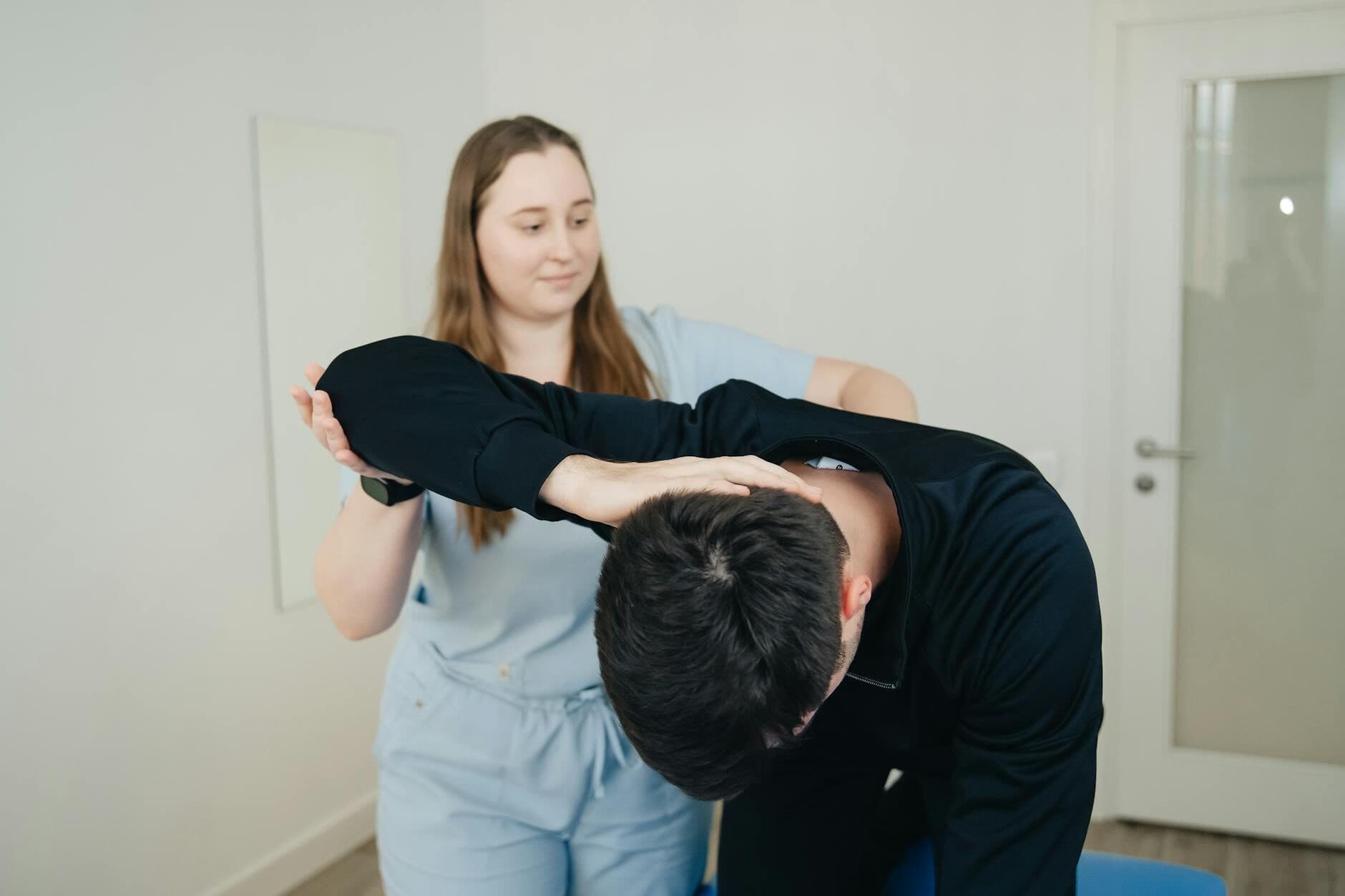
Top Physiotherapy Exercises for Back Pain Relief in Amsterdam
Back pain is one of the most common reasons people in Amsterdam seek help — and one of the most misunderstood. It rarely has a single cause, and it rarely responds to a single fix. What the research consistently shows is that the back itself is often not the primary problem: it is the output of a system that has lost access to certain movements, positions, or sensory inputs somewhere else in the body. When you address those upstream restrictions, the back tends to reorganize quickly — and that reorganization is usually measurable right away in how you move and how you feel.
This guide expands on the exercises introduced above, explains the reasoning behind them, and gives you a more complete picture of what is actually happening when your back hurts — and what can genuinely help.
What Back Pain Actually Is: Symptoms as System Outputs
Pain in the lower back is a signal, not a diagnosis. Your nervous system is constantly monitoring load, movement variability, and threat — and when it detects that something is being asked of a region that lacks the capacity to meet that demand, it generates a protective response. That response often feels like tightness, ache, or sharp pain in the lumbar area.
The important clinical insight is that the location of pain and the source of the problem are frequently different structures. A lumbar segment may be compressed or irritated because the hip joint above it or the thoracic spine below the shoulder blades has stopped contributing its share of movement. The lumbar spine then compensates — it takes more load, moves through a narrower range, and eventually protests. Treating only the painful segment without restoring the missing movement elsewhere is why so many people experience temporary relief that does not last.
At Alter, the first question in any assessment is not “where does it hurt?” but “what is the system missing?” — a restricted hip rotation, a locked thoracic segment, a pelvic floor that cannot properly co-contract with the diaphragm. Finding and addressing that primary restriction is what we mean by Heal the root. Not just the pain.
Common Causes of Back Pain in Amsterdam
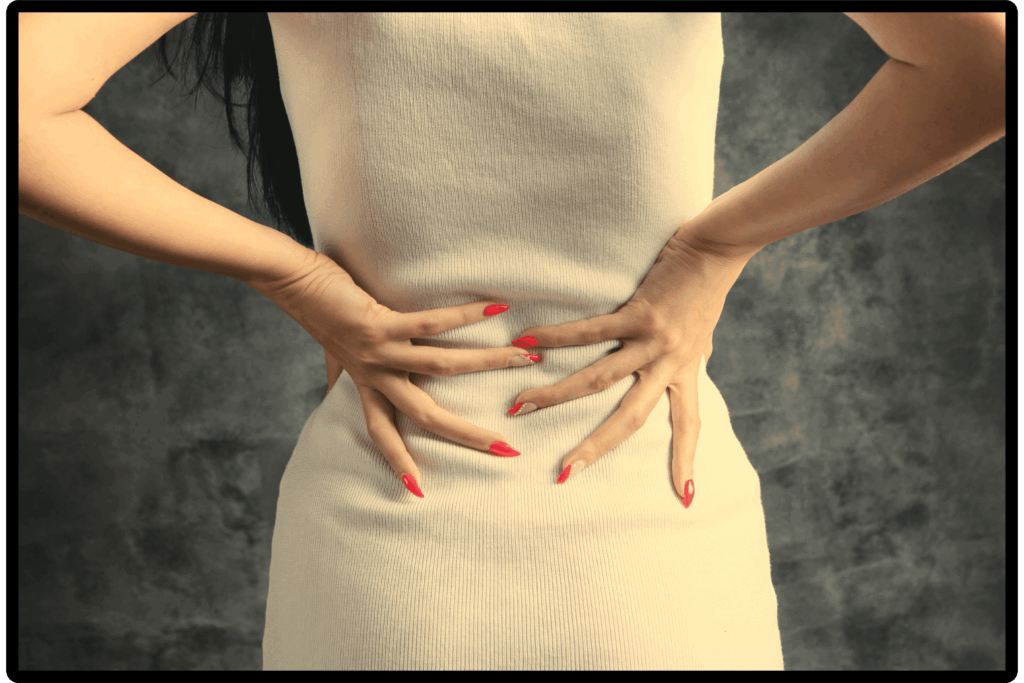
Several patterns appear repeatedly in an Amsterdam context:
- Prolonged sitting at a desk. Long hours in a fixed position gradually reduce the hip flexors’ ability to lengthen and the thoracic spine’s ability to extend and rotate. The lumbar spine is then recruited to compensate for both, well beyond its designed capacity.
- Cycling posture. Amsterdam’s cycling culture is genuinely healthy — but cycling keeps the hips in a relatively narrow flexion-extension arc, rarely loading hip abduction, external rotation, or single-leg lateral control. Over time, this creates movement gaps that the lower back fills.
- Cobblestone impact. The uneven surfaces throughout the city create repetitive, low-grade jarring forces. Without adequate shock-absorbing capacity in the hips and thoracic spine, those forces concentrate at the lumbar level.
- Weak deep stabilisers. The muscles most relevant to lumbar control — the deep fibres of multifidus, the transversus abdominis, the diaphragm, and the pelvic floor — function as a pressure-regulating canister around the spine. When any one of them is poorly recruited, spinal loading increases even during light activity.
- Nervous system sensitisation. When pain has been present for more than a few weeks, the nervous system can become sensitised — meaning it generates a pain signal at lower and lower thresholds of input. This is not imaginary; it is a measurable neurophysiological change, and it responds to specific graded movement and sensory inputs, not rest.
Understanding these patterns is why a proper assessment — rather than a generic exercise programme — tends to produce faster, more durable results. If you are unsure whether your symptoms warrant a professional evaluation, you do not need a GP referral in the Netherlands: you can book directly with a physiotherapist and be assessed the same week.
How We Find and Address the Root Restriction
A clinical assessment at Alter begins with movement screening: we observe how you bend forward, extend, rotate, and load a single leg. We are looking for the segment or region that fails to contribute — the hip that substitutes rotation for extension, the thoracic spine that stays rigid while the lumbar region over-flexes. We then test a hypothesis: apply a small, targeted input — a joint mobilisation, a specific cue, a needle at a motor point, or a change in breathing pattern — and immediately retest the movement that was restricted.
If the intervention has reached the correct level of the system, the change is visible and often felt by the patient within the same session: more range, less effort, reduced pain on loading. This is not anecdote; measurable immediate response is a standard clinical benchmark in contemporary manual therapy and neuromodulatory practice. The specific tool — hands-on joint work, therapeutic exercise, Japanese acupuncture, or breathing mechanics — is chosen by the reasoning, not by habit. The body organises around the smallest effective input; our job is to find it.
For patients whose back pain has a significant sport or load history, a more detailed biomechanical analysis is often warranted. Our sports physiotherapy approach applies the same root-finding logic with additional attention to training load, tissue capacity, and performance demands.
Self-Care and Exercises You Can Start Today
The two exercises below — crunch variations and lunge variations — were introduced in the original article and remain sound choices. Here is the reasoning behind each, plus two additional movements that address the thoracic and hip restrictions described above.
1. Crunch Variations — Deep Abdominal Activation
The goal here is not to build “six-pack” strength; it is to train the lower abdominal fibres that form part of the pressure-regulating canister around the lumbar spine. A controlled crunch, performed with conscious engagement of the transversus abdominis before the movement begins, teaches the nervous system to recruit these fibres ahead of load — which is exactly what healthy spinal control looks like.
How to perform: Lie on your back, knees bent, feet flat. Before lifting, take a gentle breath in, then on the exhale draw your lower abdomen lightly inward — not a violent suck, just a subtle narrowing. From that engaged position, lift your shoulders a few centimetres off the ground and hold for two to three seconds. Lower with control. Aim for 10–15 repetitions across 3 sets. Bicycle crunches add a rotational component that also loads the obliques and begins to introduce the thoracic rotation the back often lacks.