
Posture & Movement Correction
Posture & Movement Correction
Improving How the Body Organizes Itself, Not Forcing “Good Posture”
Many people are told they have “bad posture.”
They try to sit straighter, brace their core, or correct themselves throughout the day—yet pain, stiffness, or fatigue often remain.
In our experience, posture is rarely the true problem.
At Alter Physio & Acupuncture, posture is understood as a result of how the body moves, breathes, and adapts to daily demands. When movement becomes inefficient or the nervous system stays under constant load, the body adopts postures that feel protective—even if they look “incorrect.”
Posture & movement correction is therefore not about forcing alignment, but about helping the body reorganize itself naturally.
Why Posture Correction Often Fails
Traditional posture correction focuses on appearance: standing straight, pulling shoulders back, or holding tension in certain muscles.
This approach often fails because:
- Posture is controlled unconsciously by the nervous system
- Movement habits override conscious correction
- Breathing patterns influence spinal stability
- Chronic stress increases muscle guarding
- The body prioritizes safety over symmetry
Without addressing these factors, posture quickly returns to old patterns.
What We Focus On in Posture & Movement Correction
Rather than correcting static posture, we assess how posture changes during movement and daily activities.
Our focus includes:
- How the body organizes itself while standing, sitting, and walking
- Coordination between spine, pelvis, and limbs
- Breathing patterns and trunk control
- Load distribution and balance
- Areas of unnecessary tension or collapse
Poor posture is often a sign that certain areas are working too hard while others are not contributing effectively.
How Our Approach Is Different
Many posture programs rely on strengthening weak muscles or stretching tight ones in isolation. While this may help temporarily, it does not always change how the body moves as a whole.
Our approach:
- Prioritizes movement quality over static alignment
- Uses gentle guidance rather than rigid correction
- Addresses nervous system-driven tension
- Integrates breathing and coordination
- Adapts as your movement patterns change
This allows posture to improve as a byproduct of better movement, not constant effort.
When Posture & Movement Correction Is Most Helpful
This approach is particularly useful for people who:
- Experience neck, shoulder, or back tension
- Feel stiff or fatigued during daily activities
- Sit or stand for long periods
- Notice pain without a clear injury
- Have tried posture correction without lasting results
It is also valuable for preventing future pain before symptoms become persistent.
Integration With Other Treatments
Posture and movement issues rarely exist alone. Depending on your needs, treatment may be combined with:
- Pain & Injury Physiotherapy, to reduce discomfort and restore confidence
- Sports Physiotherapy, to improve movement efficiency under load
- Japanese Acupuncture, to reduce nervous system-driven tension
- Myofascial Release Therapy, to improve tissue adaptability
These approaches support posture correction by addressing both mechanical and neurological factors.
What a Session Looks Like
Your session begins with observing how you move in simple, everyday tasks.
Treatment may involve:
- Guided movement exploration
- Subtle posture adjustments during activity
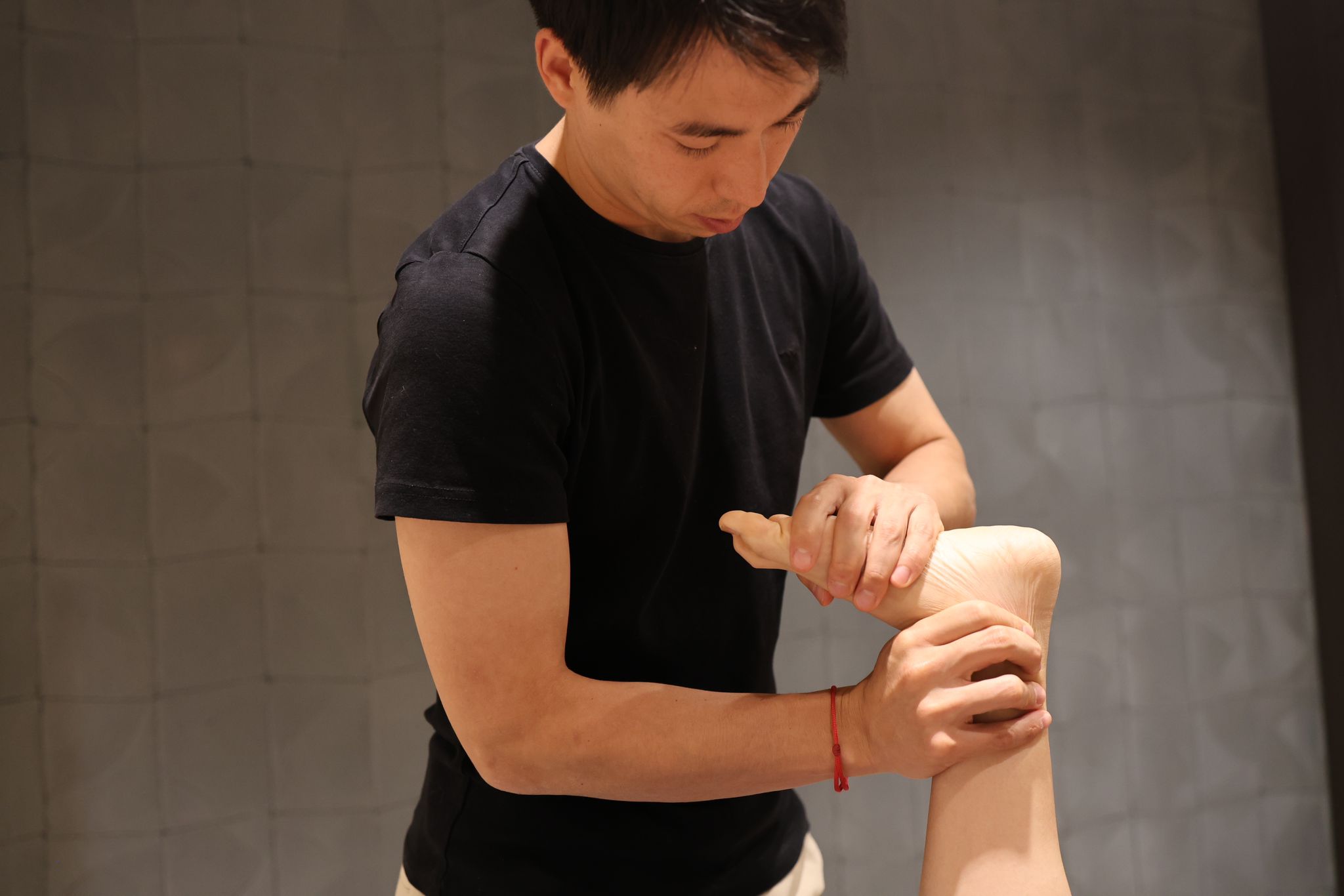
- Hands-on support to improve coordination
- Simple exercises designed to change habits, not exhaust you
The aim is to make better posture feel easier, not forced.
Who This Approach Is For
Posture & movement correction at Alter Physio & Acupuncture is suitable for:
- People with recurring tension or stiffness
- Office workers and physically demanding professionals
- Active individuals wanting more efficient movement
- Anyone seeking long-term improvement rather than short-term fixes
Start With an Assessment
You do not need to know exactly what your posture problem is.
Your first session focuses on understanding how your body organizes movement and where unnecessary strain develops.
Book an appointment to explore how sports physiotherapy can support your return to sport with confidence and control.