

Why Hip Pain Is So Common in Amsterdam — and What You Can Do About It

Amsterdam is a city built for movement. With over 800 kilometres of cycle paths, cobblestone streets, and a culture that favours walking and biking over driving, your hips are working hard every single day. So it’s no surprise that hip pain is one of the most frequent complaints we treat at Alter Physio & Acupuncture & Acupuncture.
Whether you’re a long-time Amsterdam resident or a recently arrived expat, hip pain can disrupt everything — from your daily commute across the Vondelpark to your weekend runs along the Amstel. The good news? Hip pain physiotherapy Amsterdam clinics like ours offer evidence-based, hands-on treatment that addresses the root cause rather than just masking symptoms. This comprehensive guide will walk you through the most common causes of hip pain, explain how physiotherapy helps, and show you what to expect when you visit our clinic.
Common Causes of Hip Pain

Understanding what causes hip pain and how physiotherapy can help in Amsterdam starts with identifying where the problem originates. The hip joint is one of the body’s largest and most complex joints, and pain can stem from the joint itself, the surrounding muscles, tendons, or even from referred sources like the lower back.
Musculoskeletal Causes
- Hip bursitis (trochanteric pain syndrome): Inflammation of the bursa on the outside of the hip, often aggravated by cycling or prolonged sitting at a desk.
- Hip osteoarthritis: Degenerative wear of the cartilage inside the hip joint, common in adults over 45 but sometimes earlier in active individuals.
- Hip flexor strain: Tight or overworked hip flexors from cycling, running, or sitting for long hours — extremely common among Amsterdam’s office-based expat community.
- Labral tears: Damage to the ring of cartilage (labrum) that cushions the hip socket, often seen in athletes and active individuals.
- Gluteal tendinopathy: Degeneration or irritation of the gluteal tendons, frequently misdiagnosed as bursitis.
- Referred pain from the lumbar spine: Disc issues or facet joint problems in the lower back can send pain directly into the hip and groin area.
Lifestyle and Activity-Related Factors
Amsterdam’s lifestyle — while healthy in many ways — creates specific risk factors for hip problems:
- Daily cycling: Repetitive pedalling in a fixed range of motion can shorten hip flexors and weaken gluteal muscles over time.
- Prolonged desk work: Many expats in Amsterdam’s tech and finance sectors sit for 8+ hours daily, creating chronic hip stiffness.
- Running on hard surfaces: Canal-side paths and park routes are beautiful but often unforgiving on joints.
- Sudden increases in activity: New arrivals who start cycling everywhere without conditioning can overload hip structures quickly.
How Physiotherapy Treats Hip Pain Effectively
At Alter Physio & Acupuncture & Acupuncture, our approach to hip pain treatment Amsterdam patients receive is thorough, personalised, and grounded in current clinical evidence. We don’t believe in one-size-fits-all protocols. Here’s our typical treatment pathway:
Step-by-Step Treatment Approach
- Comprehensive assessment: A detailed examination of your hip mobility, strength, movement patterns, and lifestyle. We also screen the lower back and pelvis to rule out referred pain sources.
- Diagnosis and explanation: We explain exactly what’s happening in your hip, why it hurts, and what the recovery timeline looks like. Education is a cornerstone of effective treatment.
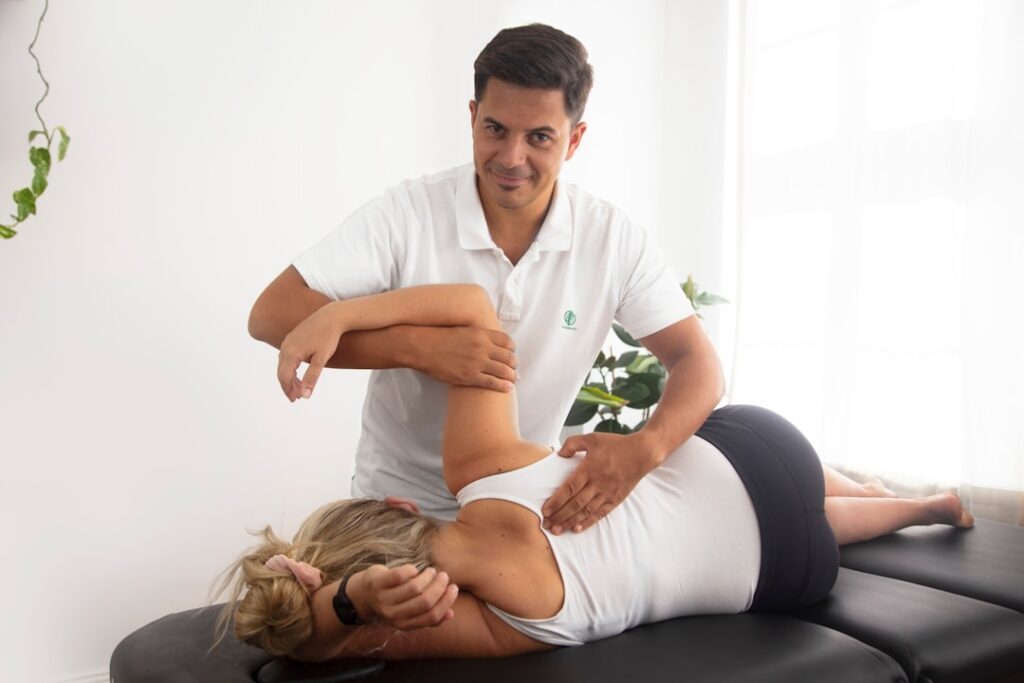
- Manual therapy: Hands-on techniques including joint mobilisation, soft tissue release, and myofascial work to reduce pain and restore movement.
- Targeted exercise programme: Progressive strengthening and flexibility exercises tailored to your specific condition — whether that’s gluteal loading for tendinopathy or range-of-motion work for osteoarthritis.
- Acupuncture (when appropriate): Our clinic uniquely offers Japanese acupuncture alongside physiotherapy, which can be particularly effective for chronic hip pain, muscle tension, and inflammation.
- Activity modification and advice: Practical guidance on adjusting your bike setup, desk ergonomics, or training schedule to support recovery.
- Ongoing monitoring and progression: Regular reassessment to ensure you’re improving and to adjust the programme as you get stronger.
For a full overview of our physiotherapy services and treatment philosophy, visit our Physiotherapy Amsterdam page.
Comparison: Physiotherapy vs. Common Alternatives for Hip Pain
| Approach | Addresses Root Cause? | Long-Term Relief? | Active Patient Involvement? | Evidence-Based? |
|---|---|---|---|---|
| Physiotherapy | Yes | Yes | Yes | Strong evidence |
| Painkillers / NSAIDs | No (symptom management) | No | No | Short-term only |
| Rest alone | Partially | Often no | No | Limited |
| Cortisone injection | No (reduces inflammation temporarily) | Variable | No | Moderate, declining for some conditions |
| Surgery | Yes (in severe cases) | Yes (when indicated) | Requires post-op rehab | For advanced pathology |
As you can see, hip pain physiotherapy Amsterdam treatment stands out as the most comprehensive conservative option — and in many cases, it’s all you need to return to full function.
Patient Story
The following case is anonymised to protect patient privacy, but reflects a real and typical scenario we encounter at our clinic.
A 38-year-old expat working in Amsterdam’s tech sector came to us after five months of worsening right hip pain. She had initially noticed a dull ache on the outside of her hip after long days cycling to her office near Zuidas. Over time, the pain progressed to the point where she couldn’t sleep on her right side, and even walking up the stairs to her apartment in De Pijp left her wincing. She had tried rest, over-the-counter anti-inflammatories, and had visited another clinic where she received a generic stretching sheet — but the pain kept returning. She described feeling frustrated and worried that something was seriously wrong.
During her initial assessment at Alter Physio & Acupuncture & Acupuncture, we identified significant weakness in her gluteus medius and a pattern consistent with gluteal tendinopathy — not simple bursitis, as she had been previously told. Her cycling posture and saddle height were also contributing to the overload. We started with isometric gluteal exercises to manage pain, gradually progressed to loaded strengthening over six weeks, incorporated Japanese acupuncture to address persistent muscle tension in her hip and lower back, and advised specific adjustments to her bike setup.
By week eight, she was sleeping through the night pain-free and had returned to cycling her full commute. At her final session in week ten, she reported feeling stronger than before the injury started. She told us she wished she had come sooner — a sentiment we hear often from patients who have tried other treatments without success before finding us.
When to See a Physiotherapist for Hip Pain
Many people wait too long before seeking professional help for hip pain, hoping it will resolve on its own. While minor muscle soreness often does, persistent hip pain rarely fixes itself — and delaying treatment can lead to compensatory patterns that cause problems elsewhere (the knee, lower back, and even the ankle are common secondary sites).
You should see a physiotherapist for hip pain Amsterdam if:
- Your hip pain has lasted more than two weeks
- Pain disturbs your sleep
- You have difficulty walking, cycling, or climbing stairs
- You feel stiffness in the morning that takes more than 30 minutes to ease
- Your hip pain is affecting your work, sport, or daily life
- You’ve visited other clinics without results and want a fresh, expert perspective
If you’re also dealing with sports-related hip issues, our guide on sports physiotherapy in Amsterdam and when to see a physio offers additional insights on recognising when professional help is needed.
Frequently Asked Questions About Hip Pain and Physiotherapy in Amsterdam
What causes hip pain and how can physiotherapy help in Amsterdam?
Hip pain can be caused by a wide range of conditions including osteoarthritis, bursitis, gluteal tendinopathy, hip flexor strains, labral tears, and referred pain from the lower back. Physiotherapy helps by identifying the exact cause through a thorough assessment, then applying targeted treatment — manual therapy, progressive exercise, and lifestyle advice — to relieve pain, restore function, and prevent recurrence. In Amsterdam specifically, factors like daily cycling and prolonged desk work make certain hip conditions especially prevalent, which is why seeing a hip pain specialist physiotherapist near me Amsterdam who understands these local factors is so valuable.
How many physiotherapy sessions will I need for hip pain?
This depends on the diagnosis and severity. Many patients with acute hip flexor strains or mild bursitis improve significantly within 3–5 sessions. More complex conditions like gluteal tendinopathy or hip osteoarthritis may require 6–12 sessions over several weeks, with a strong emphasis on home exercises between appointments. During your first visit at Alter Physio & Acupuncture & Acupuncture, we’ll give you an honest estimate of your expected recovery timeline. For more details about what to expect, check our FAQ page.
Can I see a physiotherapist in Amsterdam without a GP referral?
Yes. In the Netherlands, you have direct access to physiotherapy — no GP referral is needed. You can book an appointment directly with us. However, it’s worth checking your health insurance policy, as some insurers cover more sessions with a GP referral. We’re happy to help you navigate this when you contact us.
Why choose Alter Physio & Acupuncture & Acupuncture in Amsterdam?
Alter Physio & Acupuncture & Acupuncture is trusted by international patients in Amsterdam for several key reasons. Our team includes a BIG-registered physiotherapist who provides all consultations in English, making us an ideal choice for the expat community. We combine evidence-based physiotherapy with Japanese acupuncture — a unique combination that allows us to address both the structural and neurological components of hip pain. Our clinic is conveniently located near Vondelpark, and we offer personalised care plans rather than generic treatment templates. We’re recommended by expats in Amsterdam who value clear communication, thorough assessment, and measurable results. If you’re an English-speaking resident looking for expert hip care, visit our English-speaking physiotherapist Amsterdam page to learn more about how we support international patients.
Ready to Get Your Hip Pain Under Control?
Don’t let hip pain dictate how you move through Amsterdam. Whether you’re dealing with a nagging ache that won’t go away, recovering from a sports injury, or you’ve been to other clinics without the results you were hoping for, hip pain physiotherapy Amsterdam at Alter Physio & Acupuncture & Acupuncture can help you get back to living fully.
Book your appointment today and take the first step toward lasting hip pain relief physiotherapy Amsterdam residents can count on. Our English-speaking, BIG-registered physiotherapist is ready to assess your hip, explain what’s going on, and build a treatment plan that works — for you, your body, and your Amsterdam lifestyle.
Book now at Alter Physio & Acupuncture & Acupuncture →
n
Written by Hidekazu Kuwabara, Registered Physiotherapist (BIG-registered, Amsterdam)
Hidekazu has over 10 years of clinical experience in physiotherapy and acupuncture. He specialises in musculoskeletal pain, sports injuries, and integrative East-West medicine at Alter Physio & Acupuncture, Amsterdam.
Disclaimer: This article is for informational purposes only and does not constitute medical advice. Always consult a qualified healthcare professional before making decisions about your health or treatment.