

Understanding Hip Pain: Why It Shouldn’t Be Ignored
Hip pain is one of the most common musculoskeletal complaints we treat at Alter Physio & Acupuncture & Acupuncture in Amsterdam. Whether you’re a cyclist navigating the city’s bike lanes, an office worker sitting for long hours, or a runner training along the Amstel, hip pain can disrupt every aspect of your daily life. The hip joint is the body’s largest ball-and-socket joint, bearing your full body weight and enabling virtually every movement you make — from walking and climbing stairs to bending and turning.
Despite its importance, many people dismiss early hip discomfort as something that will resolve on its own. Unfortunately, untreated hip pain often worsens, leading to compensatory movement patterns that cause problems in the lower back, knees, and even the ankles. This comprehensive guide explores the most common causes of hip pain and explains how hip pain physiotherapy in Amsterdam can help you recover fully, stay active, and prevent recurrence.
Common Causes of Hip Pain

Effective treatment begins with an accurate diagnosis. At our Amsterdam clinic, we see a wide variety of hip conditions. Below are the most frequent causes of hip pain we encounter:
1. Hip Bursitis (Trochanteric Bursitis)
Inflammation of the bursa — a small fluid-filled sac on the outside of the hip — causes a sharp, burning pain on the outer hip and thigh. It is especially common among cyclists and people who sleep on their side. Repetitive friction from the iliotibial band over the greater trochanter is the typical mechanism.
2. Hip Osteoarthritis
Degenerative wear of the hip joint cartilage leads to stiffness, deep groin pain, and reduced range of motion. Although more common after age 50, we increasingly see early-stage osteoarthritis in active adults in their 30s and 40s. Evidence strongly supports physiotherapy as a first-line treatment before considering surgery.
3. Hip Flexor Strain and Tendinopathy
Prolonged sitting — extremely common in Amsterdam’s office and tech environments — shortens and weakens the hip flexor muscles. When combined with sudden activity, this can lead to strains or chronic tendinopathy causing pain at the front of the hip.
4. Femoroacetabular Impingement (FAI)
FAI occurs when extra bone growth along the femoral head or acetabulum creates abnormal contact during movement. It produces a pinching sensation in the groin, particularly during deep squatting, cycling, or prolonged sitting.
5. Gluteal Tendinopathy
Often misdiagnosed as bursitis, gluteal tendinopathy involves degeneration of the gluteus medius or minimus tendons. It causes lateral hip pain that is worse when lying on the affected side, climbing stairs, or standing on one leg.
6. Referred Pain from the Lower Back
Not all hip pain originates in the hip. Lumbar disc problems, sacroiliac joint dysfunction, and nerve irritation can refer pain into the hip and buttock region. A thorough assessment is essential to identify the true source. For more on how the lower back and hip are connected, see our detailed guide on lower back pain physiotherapy in Amsterdam.
| Condition | Primary Pain Location | Aggravating Factors | Who It Affects Most |
|---|---|---|---|
| Hip Bursitis | Outer hip | Lying on side, stairs, cycling | Cyclists, side-sleepers |
| Osteoarthritis | Deep groin / front of hip | Weight-bearing, morning stiffness | Adults 45+ |
| Hip Flexor Strain | Front of hip / groin | Sprinting, kicking, prolonged sitting | Office workers, runners |
| FAI | Groin (pinching) | Deep squat, cycling, sitting | Active adults 20–45 |
| Gluteal Tendinopathy | Lateral hip | Single-leg stance, stairs | Women 40–60, runners |
| Referred from Lower Back | Buttock / posterior hip | Sitting, bending, coughing | Desk workers, drivers |
How Hip Pain Physiotherapy in Amsterdam Works at Alter Physio & Acupuncture
At Alter Physio & Acupuncture & Acupuncture, our approach to hip pain treatment in Amsterdam follows a structured, evidence-based pathway tailored to each individual. Here is what you can expect:
- Comprehensive Assessment: We begin with a detailed history and thorough physical examination — including gait analysis, range-of-motion testing, strength assessment, and special orthopaedic tests — to pinpoint the exact cause of your hip pain.
- Personalised Treatment Plan: Based on the assessment findings, we design a treatment plan that may combine manual therapy, targeted exercise rehabilitation, dry needling, and — when indicated — Japanese acupuncture for pain modulation and tissue healing.
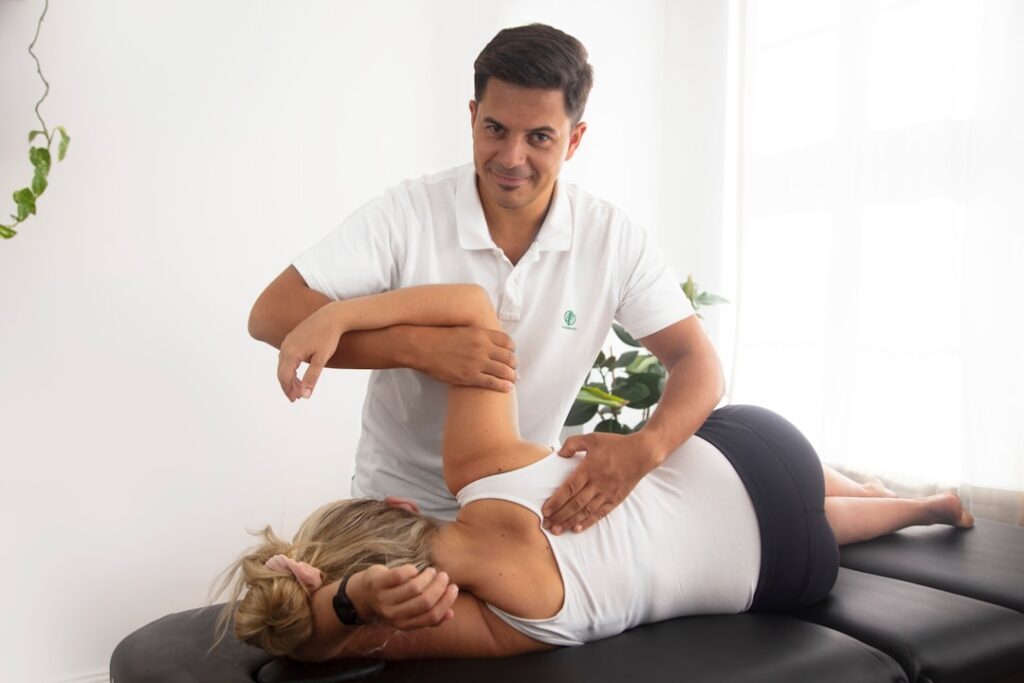
- Hands-On Manual Therapy: Joint mobilisations, soft tissue techniques, and myofascial release help restore mobility, reduce muscle guarding, and alleviate pain in the hip joint and surrounding structures.
- Progressive Exercise Rehabilitation: The cornerstone of lasting recovery. We prescribe a graded exercise programme to strengthen the hip stabilisers (particularly the gluteal muscles), improve flexibility, and correct movement patterns that contributed to the problem.
- Education and Self-Management: We teach you how to manage symptoms at home, modify activities during recovery, and integrate preventive exercises into your routine so the problem doesn’t return.
- Follow-Up and Progression: Regular reassessment ensures your treatment evolves as you improve. Our goal is always full functional recovery and long-term independence.
Our clinic is trusted by international patients in Amsterdam, and our BIG-registered physiotherapist communicates fluently in English, making every consultation clear and comfortable. If you’re an expat navigating the Dutch healthcare system, learn more about our English-speaking physiotherapist services in Amsterdam.
Patient Story
(Anonymised and shared with permission)
A 38-year-old software developer from the UK, living and working in Amsterdam’s tech sector, came to Alter Physio & Acupuncture & Acupuncture after five months of worsening left hip pain. The pain had started as a mild ache in the groin after long days cycling to his office near Amsterdam Centraal. Over time it intensified — making it painful to sit through meetings, impossible to run, and difficult to sleep on his left side. He had visited another clinic without results: he’d been given generic stretching advice and told to rest, but the pain only persisted.
During our assessment, we identified a combination of hip flexor tendinopathy and early-stage femoroacetabular impingement (FAI). His gluteus medius was significantly weak on the affected side, and prolonged sitting had created substantial tightness through his hip flexors and adductors. We designed a treatment plan combining manual therapy to the hip capsule and surrounding soft tissues, targeted progressive strengthening — starting with isometric gluteal exercises and advancing to single-leg functional movements — and Japanese acupuncture to manage pain and promote tissue recovery.
After eight sessions over six weeks, his pain had reduced from 7/10 to 1/10. He returned to cycling pain-free, resumed running at a graduated pace, and reported sleeping comfortably for the first time in months. He continues to perform his home exercise programme independently, returning for a maintenance session once a month. His case illustrates what we see regularly: when the root cause is correctly identified and treated, even persistent hip pain responds well to expert hip pain physiotherapy in Amsterdam.
Practical Tips for Managing Hip Pain at Home
While professional physiotherapy treatment is essential for resolving hip pain, there are several evidence-based strategies you can start today:
- Avoid prolonged static postures: If you work at a desk, stand and move every 30–45 minutes. Set a timer if necessary.
- Strengthen your glutes: Simple exercises like glute bridges, clamshells, and side-lying hip abduction can make a significant difference when performed consistently.
- Stretch your hip flexors gently: A kneeling hip flexor stretch held for 30 seconds on each side, performed twice daily, helps counteract the effects of sitting.
- Adjust your bike set-up: In a city like Amsterdam where cycling is a way of life, an improperly fitted bike is a common contributor to hip pain. Ensure your saddle height allows a slight knee bend at the bottom of the pedal stroke.
- Use ice for acute flare-ups: Apply an ice pack wrapped in a towel for 15–20 minutes to reduce inflammation after aggravating activities.
- Don’t push through sharp pain: Mild discomfort during exercise can be acceptable, but sharp or worsening pain is a signal to stop and seek professional advice.
Frequently Asked Questions About Hip Pain Treatment in Amsterdam
What are the most common causes of hip pain treated with physiotherapy?
The most common causes of hip pain we treat at our Amsterdam clinic include hip bursitis, osteoarthritis, hip flexor tendinopathy, gluteal tendinopathy, femoroacetabular impingement, and referred pain from the lumbar spine. Each condition requires a specific approach — which is why an accurate initial assessment by an experienced physiotherapist for hip pain in Amsterdam is so important. Physiotherapy addresses the root cause through manual therapy, progressive exercise rehabilitation, and patient education, producing lasting results rather than temporary relief.
How many physiotherapy sessions will I need for hip pain?
The number of sessions depends on the specific diagnosis, severity, and how long the problem has been present. Acute hip flexor strains may resolve in 3–4 sessions, while chronic conditions like osteoarthritis or gluteal tendinopathy typically require 6–10 sessions. During your first appointment at Alter Physio & Acupuncture & Acupuncture, we will give you a realistic timeline based on your individual presentation. We always aim to make you independent as quickly as possible with a strong home exercise programme. For more details, visit our frequently asked questions page.
Why choose Alter Physio & Acupuncture & Acupuncture in Amsterdam?
Alter Physio & Acupuncture & Acupuncture offers a unique combination of expertise that sets it apart. Our BIG-registered physiotherapist provides thorough, evidence-based assessments and personalised treatment plans. We integrate Japanese acupuncture alongside manual therapy and exercise rehabilitation for enhanced pain relief and recovery. Our team is fully English-speaking, making us recommended by expats in Amsterdam who want clear communication and high-quality care. Located conveniently near Vondelpark, the clinic provides a calm, professional environment focused entirely on your recovery. If you have tried other treatments without success or visited other clinics without results, Alter Physio & Acupuncture is the logical next step for expert hip pain physiotherapy in Amsterdam.
Can I see a physiotherapist for hip pain without a GP referral in the Netherlands?
Yes. In the Netherlands, you have direct access to physiotherapy — meaning you can book an appointment without a referral from your huisarts (GP). Most Dutch health insurance policies cover physiotherapy, though the extent of coverage varies depending on your aanvullende verzekering (supplementary insurance). We recommend checking your specific policy or contacting us directly, and we will help you understand your coverage. International expats with private insurance are also welcome — we can provide invoices in the required format for reimbursement.
Take the First Step Toward Pain-Free Movement
Hip pain doesn’t have to limit your life in Amsterdam. Whether you’re dealing with a recent injury or a chronic condition that has resisted other treatments, the team at Alter Physio & Acupuncture & Acupuncture is here to help. With expert hip pain physiotherapy in Amsterdam, personalised care, and a commitment to lasting results, we’ll work with you to get back to doing what you love — pain-free.
Ready to book your appointment? Visit our physiotherapy page to learn more or schedule your first session today. We look forward to helping you move better.
n
Written by Hidekazu Kuwabara, Registered Physiotherapist (BIG-registered, Amsterdam)
Hidekazu has over 10 years of clinical experience in physiotherapy and acupuncture. He specialises in musculoskeletal pain, sports injuries, and integrative East-West medicine at Alter Physio & Acupuncture, Amsterdam.
Disclaimer: This article is for informational purposes only and does not constitute medical advice. Always consult a qualified healthcare professional before making decisions about your health or treatment.
Related Articles
- Hip Pain Physiotherapy Amsterdam
- Acupuncture Chronic Pain Amsterdam
- Acupuncture Chronic Pain Amsterdam
Written by Hidekazu Kuwabara, Registered Physiotherapist (BIG-registered, Amsterdam)
Hidekazu has over 10 years of clinical experience in physiotherapy and acupuncture. He specialises in musculoskeletal pain, sports injuries, and integrative East-West medicine at Alter Physio & Acupuncture, Amsterdam.
Disclaimer: This article is for informational purposes only and does not constitute medical advice. Always consult a qualified healthcare professional before making decisions about your health or treatment.
Written by Hidekazu Kuwabara, Registered Physiotherapist (BIG-registered, Amsterdam)
Hidekazu has over 10 years of clinical experience in physiotherapy and acupuncture. He specialises in musculoskeletal pain, sports injuries, and integrative East-West medicine at Alter Physio & Acupuncture, Amsterdam.
Disclaimer: This article is for informational purposes only and does not constitute medical advice. Always consult a qualified healthcare professional before making decisions about your health or treatment.