


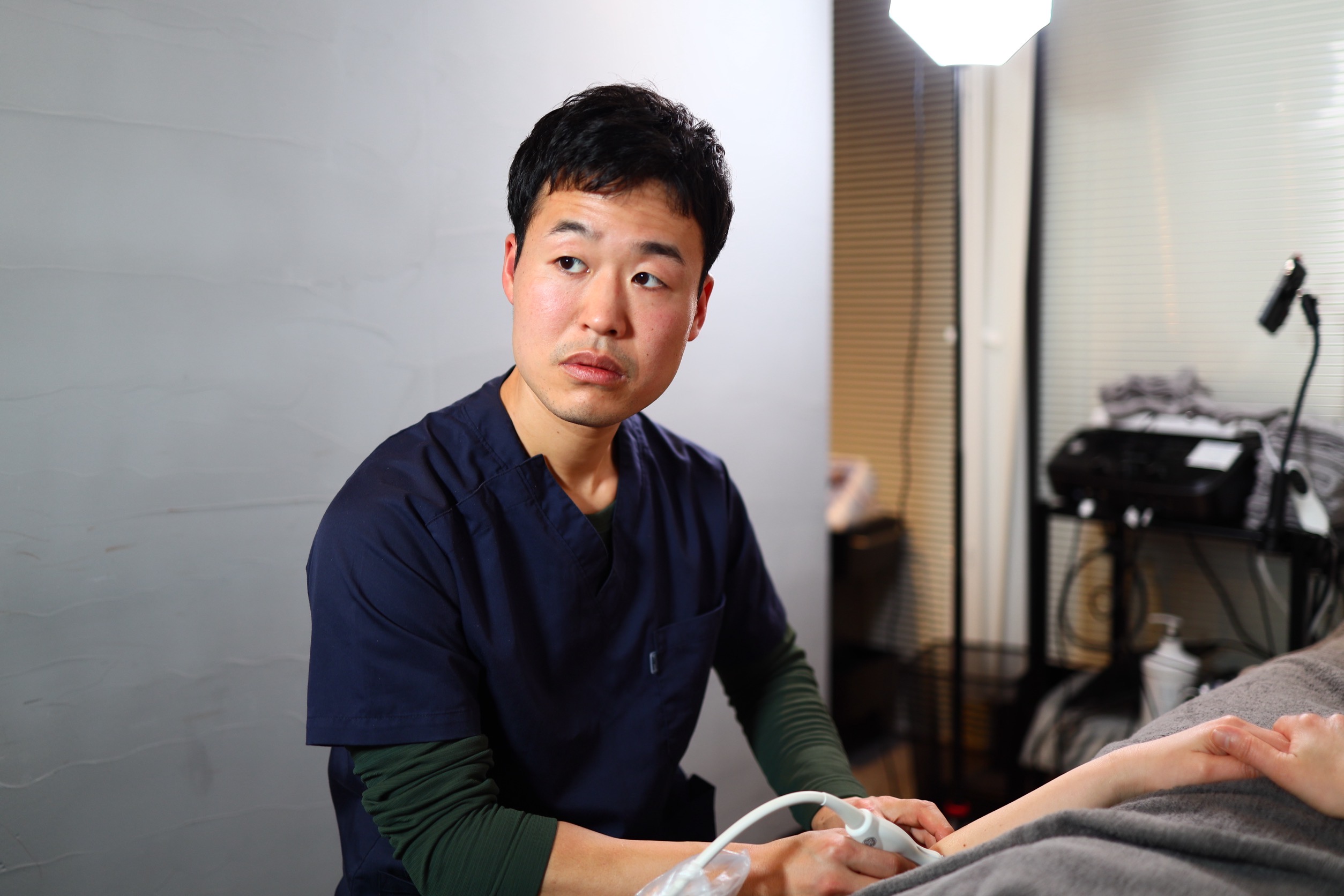

Why Breathing Retraining Anxiety Protocols Matter
Chronic anxiety rarely lives in the mind alone. It also lives in the chest, the ribs, and the breath.
Most people with long-term anxiety breathe shallowly into the upper chest. This pattern keeps the body locked in a low-grade fight-or-flight state.
In addition, the brain reads fast chest breathing as a danger signal. As a result, the loop between thought and physiology never fully resets.
At AlterPhysio Amsterdam, we treat breathing retraining anxiety cases as a physical skill, not a mood. Furthermore, we combine it with acupuncture and nervous-system tools for faster, lasting results.
In this guide, you will learn the four dysfunctional breathing patterns we see most often. You will also get a simple self-check and a four-step retraining protocol.
Moreover, we explain how acupuncture and HRV biofeedback accelerate the process. Finally, we show when breathing work alone is not enough and what to do next.
The Apical Breathing Loop
What Apical Breathing Looks Like
Apical breathing means the upper chest rises while the belly stays still. Shoulders may also lift with each inhale.
Moreover, this pattern recruits accessory muscles like the scalenes and upper trapezius. These muscles are designed for emergencies, not for resting breath.
In addition, the breath becomes faster and shallower without you noticing. Most patients we see in Amsterdam breathe 18 to 24 times per minute at rest.
Therefore, they inhale roughly twice as often as a calm, healthy adult. This excess ventilation drops CO2 levels and worsens dizziness, tingling, and chest tightness.
How It Reinforces the Sympathetic Loop
Fast upper-chest breathing increases sympathetic tone. The heart rate climbs, the gut slows, and vigilance rises.
As a result, the nervous system stays primed for threat. Therefore, anxious thoughts feel more urgent and harder to dismiss.
In addition, chronic accessory muscle use creates neck pain, jaw tension, and headaches. Many anxious patients arrive at our Amsterdam clinic with this exact cluster.
Diaphragm Anatomy and Function
The Primary Respiratory Muscle
The diaphragm is a dome-shaped muscle under the lungs. It separates the chest from the abdomen.
Furthermore, it is the engine of normal, quiet breathing. A healthy diaphragm performs about 70 to 80 percent of respiratory work.
How a Healthy Breath Moves
On inhale, the diaphragm contracts and flattens downward. The belly and lower ribs expand in all directions.
In addition, the pelvic floor and deep core gently descend with it. This 360-degree expansion is what most anxious patients have lost.
Why It Calms the Nervous System
Slow diaphragmatic breathing stimulates the vagus nerve. This shifts the body toward parasympathetic dominance.
As a result, heart rate slows and blood pressure drops. Moreover, the brain receives a strong safety signal from below.
Furthermore, the diaphragm acts as a pump for lymph and venous return. A well-functioning diaphragm therefore supports digestion, immunity, and recovery.
In addition, it stabilises the lumbar spine through intra-abdominal pressure. Many anxious patients with low back pain are surprised to learn the link.
Four Dysfunctional Breathing Patterns
1. Apical (Chest) Breathing
The upper chest dominates each inhale. The belly stays flat or pulls inward.
In addition, this pattern is the most common finding in chronic anxiety.
2. Paradoxical Breathing
The belly moves inward on inhale instead of outward. The chest rises sharply at the same time.
Furthermore, paradoxical breathing reverses the natural pressure system. It often appears after trauma, surgery, or long-term anxiety.
3. Habitual Mouth Breathing
The mouth stays open at rest and during sleep. Nasal airflow is bypassed almost entirely.
Moreover, mouth breathing reduces nitric oxide production and dries the airways. It also keeps the breath faster and shallower than needed.
4. Chronic Breath Holding
Many anxious patients freeze the breath during focus or stress. They may not notice it for minutes at a time.
As a result, CO2 levels swing and the next breath becomes a gasp. This pattern is common at desks, screens, and during phone calls.
Self-Check: The Hand Test
How to Perform It
Sit or lie down and relax your shoulders. Place one hand on your belly and one hand on your upper chest.
In addition, breathe normally for one minute without changing anything. Simply observe which hand moves first and which moves more.
How to Read the Result
The belly hand should rise first and move more than the chest hand. If the chest hand dominates, your default pattern is apical.
Moreover, if both hands barely move, you may be a chronic breath holder. Therefore, retraining should be your starting point before any high-intensity exercise.
Count Your Breath Rate
After the hand test, count your breaths for one full minute. A healthy resting rate sits between 10 and 14 breaths per minute.
Furthermore, anything above 16 suggests chronic hyperventilation. Combined with chest-dominant motion, this is the classic anxiety breathing pattern.
In addition, check whether you breathe through the nose or the mouth. Mouth-dominant breathing at rest is a clear signal that retraining is needed.
The Four-Step Retraining Protocol
Step 1: Supine Awareness (Weeks 1 to 2)
Lie on your back with knees bent and one hand on the belly. Breathe in through the nose for four seconds and out for six seconds.
In addition, aim for five minutes, twice a day. The only goal is to feel the belly rise without forcing it.
Step 2: Seated Practice (Weeks 3 to 4)
Sit upright on a firm chair with feet flat. Repeat the same nasal four-in, six-out pattern.
Furthermore, add awareness of the lower ribs expanding sideways. This trains the diaphragm against gravity, which is more functional.
In addition, place both thumbs on the lower ribs to feel the lateral expansion. Many anxious patients have rigid, immobile lower ribs at first.
As a result, this stage often reveals where breathing has been locked for years. Patience matters here, because the ribs need time to release.
Step 3: Under Low Load (Weeks 5 to 6)
Now practice while walking, climbing stairs, or carrying groceries. Keep the breath nasal and the belly active.
As a result, the new pattern starts to survive real-life demand. Therefore, the nervous system learns that movement does not require chest breathing.
In addition, try cycling slowly along the Amstel with nasal breathing only. If the mouth opens, slow down until nose breathing is comfortable again.
Moreover, this trains tolerance to small CO2 increases. That tolerance is the missing piece in most chronic anxiety presentations.
Step 4: Integration Into Daily Life
Bring diaphragmatic breathing into speech, work calls, and exercise. Use simple cues like belly-soft, jaw-soft, shoulders-down.
Moreover, set phone reminders every two hours for a 30-second check-in. Within three to four months, the new pattern becomes the default.
In addition, practise during mildly stressful moments like emails or traffic. These micro-doses teach the nervous system to associate stress with calm breath.
Therefore, the protocol gradually rewires both physiology and behaviour. The skill must be trained where you actually live, not only on the yoga mat.
Common Mistakes to Avoid
Do not force the inhale or push the belly out aggressively. The motion should feel passive and soft, not muscular.
Furthermore, avoid holding your breath at the top or bottom of the cycle. Smooth, continuous airflow is the goal at every stage.
Acupuncture for the Autonomic Loop
Why We Combine Both
Breathing retraining is powerful but slow. Acupuncture accelerates the autonomic shift in many patients.
In addition, our acupuncturists target specific vagal and calming points. This makes the retraining easier to absorb.
Key Points We Use
CV17 sits on the sternum and softens chest tension. GV20 sits at the crown and calms mental over-arousal.
Furthermore, auricular (ear) points stimulate the vagus nerve directly. Many patients feel a clear drop in baseline anxiety within three sessions.
In addition, we sometimes add PC6 on the inner forearm for palpitations. Yintang, between the eyebrows, is also useful for racing thoughts.
As a result, the combination of needles and breath creates a stronger parasympathetic shift. Most patients describe a deep, almost heavy calm during treatment.
Read more about how this works in our guide on the vagus nerve and stress. You can also explore acupuncture for stress and burnout and acupuncture for autonomic balance.
HRV Biofeedback as an Adjunct
What HRV Measures
Heart rate variability reflects vagal tone in real time. Higher variability means better autonomic flexibility.
Moreover, a simple chest strap or finger sensor can show your HRV during practice. This turns an invisible skill into visible data.
How We Use It
We coach patients to find their resonant breathing rate, usually around six breaths per minute. Then we track weekly HRV trends alongside symptom diaries.
As a result, motivation stays high because progress is measurable. Therefore, dropout rates fall and outcomes improve.
What the Research Shows
Several trials show HRV biofeedback reduces generalised anxiety symptoms. Effect sizes are moderate and consistent across studies.
Moreover, the gains hold up at three- and six-month follow-ups. This makes biofeedback one of the better-supported adjuncts to breathing work.
When Breathing Alone Is Not Enough
Signs You Need More Support
Some patients reach a plateau despite consistent practice. Others present with trauma, panic, or severe insomnia.
In addition, certain medical conditions amplify anxiety symptoms. These include thyroid issues, sleep apnea, and cardiac arrhythmias.
Our Referral Network
We work with English-speaking psychologists across Amsterdam. They handle trauma processing, CBT, and EMDR when needed.
Furthermore, we refer suspected sleep apnea to specialised sleep clinics. For long-term burnout, see our article on burnout recovery.
In addition, severe panic disorder usually responds better with combined care. Therapy, medication review, and breathing work together produce the best outcomes.
As a result, we never frame breathing retraining as a stand-alone cure. Instead, it is the physical foundation that makes other interventions work.
Start Your Breathing Retraining in Amsterdam
Chronic anxiety is not only psychological. It is a learned physical pattern that can be unlearned.
In addition, breathing retraining anxiety protocols give you a daily tool you control. Combined with acupuncture and HRV coaching, the results compound quickly.
Furthermore, our team in Amsterdam Oud-Zuid offers integrated assessment in English, Dutch, and Japanese. We screen your breathing pattern, posture, and autonomic balance in the first session.
Moreover, you leave with a personalised four-step plan and clear weekly milestones. Book a first session through our contact page and start retraining your nervous system today.
n
Written by Hidekazu Kuwabara, Registered Physiotherapist (BIG-registered, Amsterdam)
Hidekazu has over 10 years of clinical experience in physiotherapy and acupuncture. He specialises in musculoskeletal pain, sports injuries, and integrative East-West medicine at Alter Physio & Acupuncture, Amsterdam.
Disclaimer: This article is for informational purposes only and does not constitute medical advice. Always consult a qualified healthcare professional before making decisions about your health or treatment.


