
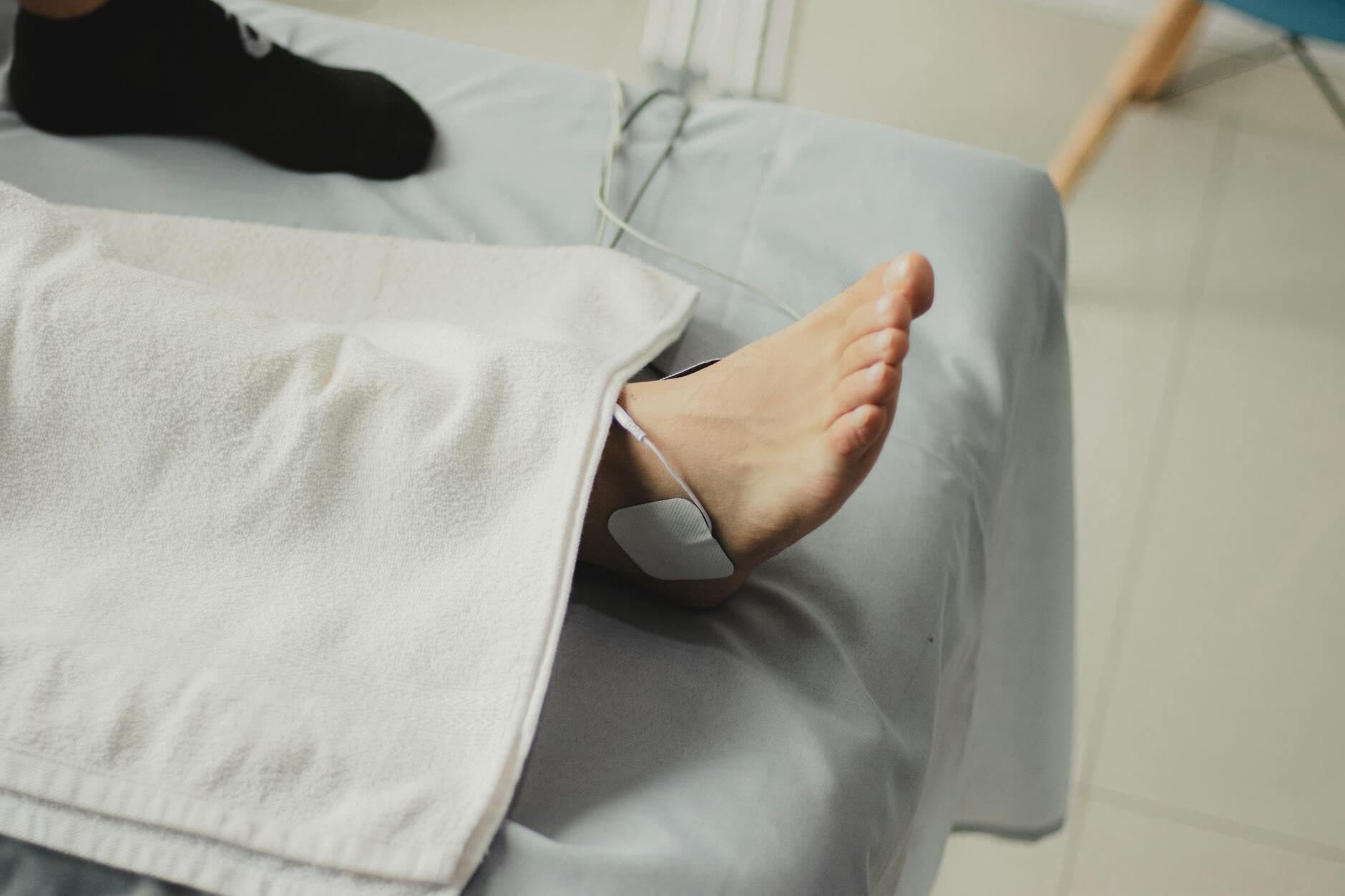
Plantar Fasciitis Amsterdam: Heel Pain Relief and Recovery
What Is Plantar Fasciitis — and Why Does It Keep Coming Back?
Plantar fasciitis is one of the most common sources of heel pain, yet it is also one of the most persistently mismanaged. The plantar fascia is a thick band of connective tissue that runs along the sole of your foot, connecting your heel bone (calcaneus) to the base of your toes. Its job is to act as a tensile spring — absorbing load during each step and returning energy as you push off. When that tissue is repeatedly loaded beyond its current capacity, the cells that maintain it cannot keep up with the demand. The result is a gradual breakdown at the fascial insertion on the heel, producing the sharp, stabbing pain that most people recognise immediately.
What makes this condition frustrating is that the local tissue is rarely the whole story. The plantar fascia does not work in isolation. It is the terminal end of a load-transfer chain that includes your calf muscles, Achilles tendon, ankle mobility, hip control, and even how your nervous system organises your gait under fatigue. When any link in that chain is restricted or underperforming, the fascia compensates — and over time, compensation becomes damage. This is why stretching the arch alone, while sometimes temporarily helpful, so often fails to resolve the problem fully. If you want to understand that pattern in more depth, our dedicated article on plantar fasciitis treatment for runners — and why stretching alone fails goes into the biomechanical detail.
At Alter, we treat plantar fasciitis by asking a different first question: not “where does it hurt?” but “what is the primary restriction that is making this tissue the weak point?” The answer shapes everything that follows.
Common Causes and Contributing Factors
No two cases of plantar fasciitis look exactly alike, but several patterns appear consistently in clinical practice.
- Sudden load spikes: A sharp increase in running distance, a new job on hard floors, or a holiday involving far more walking than usual — the tissue has not had time to adapt.
- Restricted ankle dorsiflexion: When the ankle cannot move freely into flexion (often due to a stiff Achilles or a previously sprained ankle that never fully rehabilitated), the foot compensates by pronating excessively, placing asymmetric strain on the medial fascial band.
- Reduced hip extension or gluteal control: Poor push-off mechanics from the hip force the calf and foot to work harder late in the gait cycle, increasing tensile load at the calcaneal insertion.
- Foot posture extremes: Both flat feet (excessive pronation) and high, rigid arches distribute load unevenly. Neither is automatically a problem, but either can become one when combined with the factors above.
- Footwear transitions: Moving from supportive shoes to minimalist footwear too quickly, or consistently wearing unsupportive flat shoes on hard surfaces, alters how force is distributed through the foot.
- Nervous system sensitisation: In persistent or chronic cases, central sensitisation can mean the pain response is amplified beyond what the tissue damage alone would predict. This is especially relevant when pain seems disproportionate, widespread, or highly variable day to day.
Runners, teachers, retail workers, and anyone spending long hours on hard floors are among the populations we see most often — but this condition is not exclusive to those on their feet all day. Desk workers who sit for hours and then suddenly increase their activity are equally vulnerable.
Recognising the Symptoms
The most characteristic sign of plantar fasciitis is sharp heel pain with the first steps of the morning. During sleep, the plantar fascia shortens in a relaxed position; weight-bearing immediately stretches the already irritated tissue, which is why those first moments are typically the worst. After five to ten minutes of walking, the tissue warms up and pain often eases — sometimes considerably.
Pain commonly returns after prolonged sitting or standing, particularly toward the end of a long workday. It tends to flare after exercise rather than during it, which can mislead people into thinking they are recovering well during a run, only to feel significantly worse the next morning. Tenderness is usually localised to the inner (medial) aspect of the heel, and firm pressure on the base of the heel reproduces it reliably. In some cases, discomfort extends along the arch itself.
If pain is felt higher up the heel, is accompanied by nerve-like symptoms (tingling, burning, or numbness into the toes), or does not follow the morning-pain pattern at all, a thorough assessment is particularly important — other structures, including the posterior tibial nerve or the fat pad of the heel, may be involved.
How We Find and Resolve the Root Restriction
A clinical assessment at Alter begins with listening — how the pain behaves, when it started, what has been tried, and what your daily demands actually look like. From there, we assess movement: ankle range of motion, single-leg loading mechanics, hip mobility and strength, and the way your foot contacts the ground in real conditions. We are looking for the primary restriction — the missing movement or lost sensory input that is making your fascia carry a disproportionate share of the load.
Once we identify that restriction, we apply the smallest effective input that allows the system to reorganise. This might mean hands-on mobilisation of a stiff ankle joint, followed immediately by a reassessment of your calf flexibility or pain on weight-bearing — if the change is measurable, we have found a useful lever. It might mean fine acupuncture needles placed to reduce local tissue tension and recalibrate the nervous system’s threat response in the heel, confirmed by an immediate change in pressure sensitivity. It might mean a specific loading exercise that challenges the fascia at the right point in its healing curve. The tool is chosen by the reasoning, not the other way around.
For runners specifically, understanding the relationship between training load, gait pattern, and tissue tolerance is central to lasting recovery — and to preventing recurrence. You can read more about that process in our guide to why runners with plantar fasciitis need more than a stretching protocol.
Self-Care and Useful Exercises
While a proper assessment will always give you more specific guidance, the following strategies are safe, evidence-supported, and frequently helpful as part of a broader recovery plan.
Before Your First Steps in the Morning
Before standing, flex and extend your foot ten times and gently pull your toes back toward your shin while seated on the edge of the bed. This restores some length to the fascia before it is abruptly loaded. A short self-massage along the arch with your thumb, or rolling the foot on a firm ball for sixty seconds, can also reduce the severity of that first-step pain.
Calf and Achilles Loading
Isometric and eccentric calf exercises — particularly seated calf raises (which bias the soleus) performed slowly and with control — have a strong evidence base for reducing fascial load and supporting tissue remodelling. Aim for three sets of twelve to fifteen repetitions, with a slow lowering phase. This is not the same as a quick stretch; the controlled load is what drives the adaptive response.
Intrinsic Foot Strengthening
Short-foot exercises (gently doming the arch without curling the toes), towel scrunches, and single-leg balance work on a slightly unstable surface all help rebuild the active support structures of the foot. These are progressive — start with both feet, build toward single-leg, and eventually add mild instability.
Load Management
Reducing high-impact activity during a flare is sensible, but complete rest is rarely the right answer and can even delay recovery by reducing the adaptive stimulus the tissue needs. Shorter, more frequent bouts of movement — with adequate footwear and surface — tend to be more effective than either full rest or pushing through significant pain.
When to Come In
Seek a professional assessment if:
- Heel pain has persisted for more than two to three weeks despite basic self-care
- Pain is worsening rather than plateauing or improving
- You are a runner or active person who has tried modifying training without success
- Pain is present on both feet, or is accompanied by swelling, redness, or nerve-like symptoms
- You have had plantar fasciitis before and it keeps returning — this almost always signals an unresolved upstream restriction
Early, targeted intervention shortens recovery time significantly. Chronic plantar fasciitis — typically defined as symptoms lasting beyond three to six months — can still resolve well, but the process is more involved and the nervous system’s contribution to pain maintenance needs to be addressed alongside the local tissue.
Frequently Asked Questions
Is plantar fasciitis the same as a heel spur?
Not exactly, though they often coexist. A heel spur is a bony growth that can form at the calcaneal attachment over time in response to chronic fascial tension. Many people with heel spurs have no pain at all; many people with classic plantar fasciitis have no spur visible on imaging. Treatment decisions should be guided by symptoms and function, not by the presence of a spur alone.
Will I need to stop running?
Not necessarily. The goal is to find a training volume and intensity your tissue can tolerate while still recovering — not to eliminate load entirely. In many cases, modifying surface, pace, and distance while addressing the underlying restriction allows people to continue running throughout rehabilitation.
How many sessions will I need?
This depends on how long symptoms have been present and what the underlying restriction is. Recent-onset cases with a clear mechanical cause often show meaningful improvement within three to five sessions. More chronic or complex presentations typically require a longer process. We will give you an honest estimate after your first assessment.
Can acupuncture help if physiotherapy exercises haven’t worked?
Fine-needle acupuncture can be a useful addition when local tissue sensitivity is high, when pain is disproportionate to the apparent structural issue, or when the nervous system appears to be maintaining a heightened threat response in the area. It is not a standalone solution, but used alongside movement rehabilitation and hands-on work, it can meaningfully reduce pain and accelerate the window in which progressive loading becomes tolerable.
If your heel pain has been limiting your mornings, your training, or your work, we would be glad to assess what is actually driving it and give you a clear, honest picture of what recovery looks like for you. Book an appointment with Hidekazu — and take the first step toward understanding what your body is asking for, not just quieting the symptom it is producing.