
Acupuncture for Eczema and Atopic Dermatitis Amsterdam
Acupuncture for Atopic Dermatitis and Eczema in Amsterdam
Atopic dermatitis — commonly called eczema — is one of the most persistent and frustrating conditions to live with. The itching interrupts sleep, stress triggers flares at the worst moments, and the standard cycle of corticosteroid creams often manages symptoms without ever addressing why the skin keeps reacting in the first place. At Alter Physio & Acupuncture in Amsterdam Zuid, we approach eczema the same way we approach any chronic condition: the skin is not the problem — it is the output of a system under strain. Our aim is to find where the system is stuck, apply the smallest effective input to let it reorganize, and confirm the change is real and measurable. That is what “Heal the root. Not just the skin” means in practice.
What Is Atopic Dermatitis — And Why Does It Persist?
Atopic dermatitis is a chronic inflammatory skin condition characterized by intense itch, skin barrier disruption, and immune dysregulation. “Atopic” signals a tendency toward allergic sensitization — the same biological terrain that often underlies asthma and hay fever. The skin barrier in people with eczema is structurally compromised (frequently linked to filaggrin gene variants), which allows environmental irritants and allergens to penetrate more deeply and trigger an immune cascade.
That immune cascade is dominated by an overactivated Th2 pathway, leading to elevated IgE antibodies, excessive histamine release, and a sustained pro-inflammatory state. What keeps this loop running, however, is rarely one thing. Common perpetuating factors include:
- Nervous system dysregulation: A chronically activated stress response raises cortisol and pro-inflammatory cytokines, both of which worsen the skin barrier and amplify itch.
- Sleep disruption: Itch peaks at night, fragmenting sleep; poor sleep in turn reduces the skin’s repair capacity — a self-reinforcing cycle.
- Gut-skin axis imbalance: Gut dysbiosis and intestinal permeability can sustain systemic low-grade inflammation that expresses through the skin.
- Food sensitivities: Common triggers include dairy, eggs, wheat, soy, and high-histamine foods — though individual patterns vary considerably.
- Environmental load: House dust mite, pollen, pet dander, synthetic fragrances, and cold dry air all stress a barrier that is already compromised.
Understanding which combination of factors is driving your eczema — and in what proportion — is the first clinical task. Without that map, treatment tends to be reactive rather than resolving.
How Acupuncture Can Help: The Mechanisms
Calming Immune Overactivation
Research into acupuncture’s effect on atopic dermatitis has grown meaningfully over the past two decades. Needle stimulation activates sensory afferents that communicate with the hypothalamus, which in turn can modulate autonomic and neuroimmune signalling. Studies have found associations between acupuncture treatment and reductions in IgE levels, histamine release, and pro-inflammatory cytokines such as IL-4 and IL-13 — the key drivers of the Th2 skew seen in eczema. The framing that resonates clinically is not that acupuncture “suppresses” immunity, but that it helps a dysregulated system find a more balanced operating point.
Reducing Itch Intensity
Itch in eczema is mediated by a complex of C-fiber nerve signals, central sensitization in the spinal cord, and inflammatory mediators in the skin. Acupuncture stimulates the release of endorphins, enkephalins, and serotonin — neurochemicals that modulate both peripheral and central itch perception. In clinical terms, patients often notice reduced itch intensity within the first few sessions, which matters because reduced scratching reduces barrier damage, which reduces inflammation. Interrupting that cycle early is clinically significant.
Regulating the Nervous System and Cortisol
Stress is one of the most reliable eczema triggers, and it operates through a concrete mechanism: cortisol and catecholamines released during a stress response directly increase skin permeability and upregulate inflammatory signalling. Acupuncture has been shown to reduce sympathetic nervous system tone and support parasympathetic recovery — measurable in heart rate variability and cortisol markers in some studies. For patients whose eczema clearly worsens with work pressure, relational stress, or life transitions, addressing this nervous system pattern is often the most important lever. You can read more about how we approach stress-related nervous system dysregulation in our guide to acupuncture for stress and burnout in Amsterdam.
Improving Sleep Architecture
Skin repair — collagen synthesis, barrier regeneration, immune recalibration — happens predominantly during slow-wave and REM sleep. Chronic itch disrupts this architecture, and the resulting sleep debt compounds inflammation the following day. Acupuncture can help shift the nervous system toward a more restorative nocturnal state. Patients frequently report improved sleep quality as one of the first noticeable changes, and with that comes a downstream improvement in skin recovery between flares.
The Japanese Acupuncture Approach at Alter
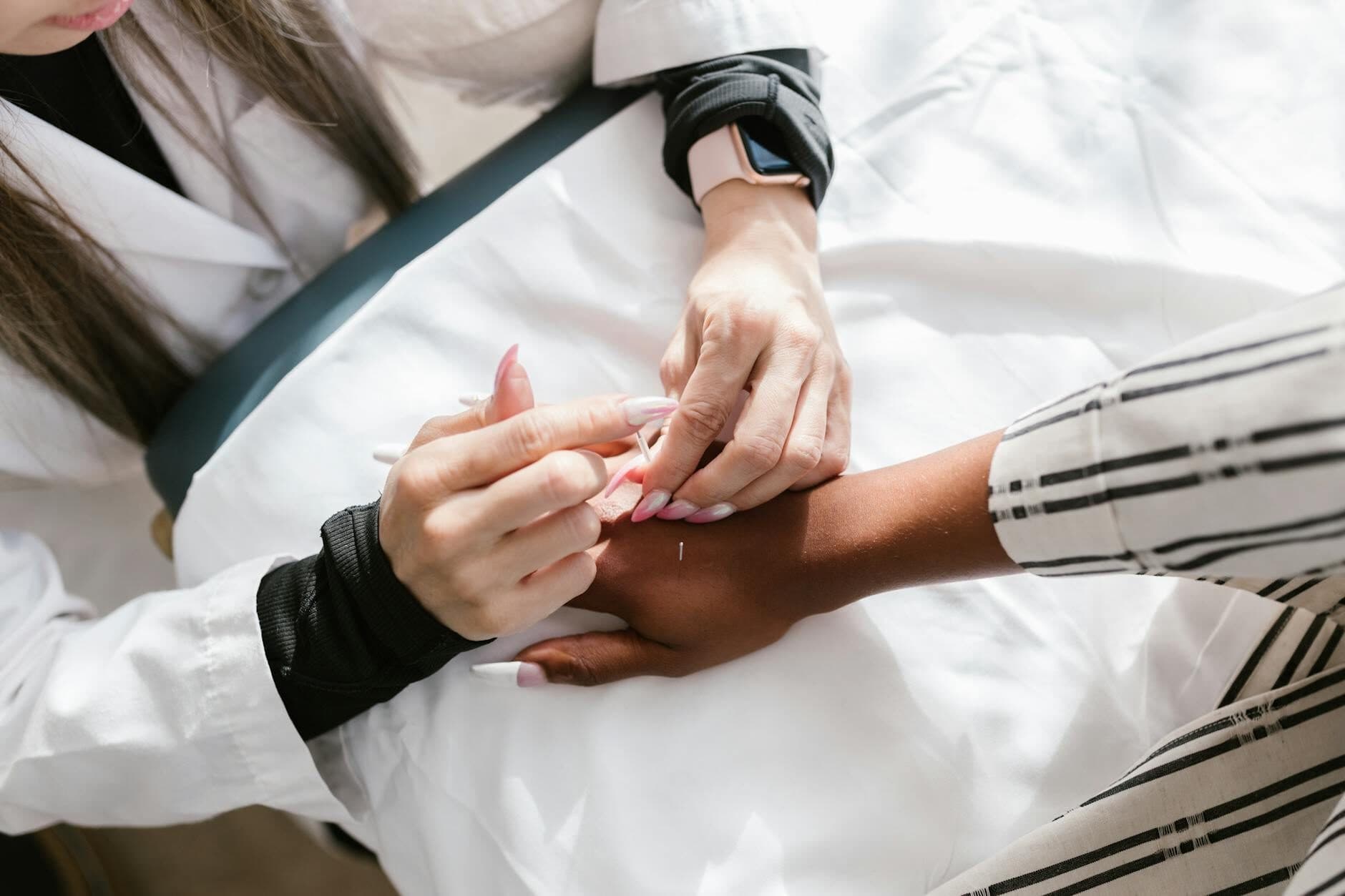
At Alter, we practice Japanese acupuncture — a style that uses considerably thinner needles, lighter stimulation, and a refined palpatory diagnostic process compared to many TCM-based approaches. This matters for eczema patients in two ways. First, the needles themselves cause minimal tissue disruption, which is relevant when skin sensitivity is already heightened. Second, the diagnostic system involves careful abdominal and meridian palpation that often reveals patterns of tension, fluid distribution, or autonomic reactivity not visible on the surface — patterns that point toward the primary restriction maintaining the whole presentation.
If you are curious about the clinical differences between styles, our article on Japanese acupuncture versus Chinese acupuncture in Amsterdam explains the distinctions in detail.
The specific tools used in any session — fine needles, hands-on work, breath coaching, or movement — are chosen by what the assessment reveals, not by a fixed protocol. What we are always looking for is a measurable change within the session: reduced skin reactivity, a shift in palpatory findings, an observable change in autonomic tone. That confirmation guides the next step.
Integrative Eczema Management: Beyond the Needles
Dietary and Gut-Focused Guidance
We do not treat skin in isolation from the gut. If clinical signs suggest gut dysbiosis, intestinal permeability, or specific food sensitivities are contributing, we will integrate evidence-based dietary advice into the plan. This typically involves a structured elimination and reintroduction period for common triggers, alongside guidance on gut-supportive nutrition — adequate fibre diversity, fermented foods where tolerated, and anti-inflammatory dietary patterns. Nutrient deficiencies relevant to skin health — particularly vitamin D, zinc, and omega-3 fatty acids — are also assessed and addressed where appropriate.
Acupuncture for Children with Eczema
Eczema is one of the most common chronic conditions in childhood, and it frequently sits at the beginning of what is called the “atopic march” — the progression from eczema to food allergy, asthma, and allergic rhinitis. Early, effective intervention can potentially interrupt this progression. We use paediatric Japanese acupuncture techniques — lighter touch, minimal or no needle retention, and where appropriate, non-insertive tools — that are well-tolerated even by young children. Parents consistently report that their children adapt to treatment more quickly than expected, and that improvements in sleep and itch often precede visible skin changes.
Self-Care Between Sessions: What You Can Do
Acupuncture sessions create a window of reduced reactivity — self-care habits determine how wide and lasting that window becomes. Practical evidence-informed strategies include:
- Emollient application within three minutes of bathing: This is one of the most evidence-backed self-care steps for maintaining barrier function. Use fragrance-free, preservative-minimal formulations.
- Temperature regulation: Sudden temperature shifts — hot showers, heated rooms followed by cold air — are common flare triggers. Lukewarm water and consistent ambient humidity (40–60%) support the barrier.
- Evening wind-down routine: Reducing light and screen exposure 60–90 minutes before sleep supports the shift toward parasympathetic dominance, which facilitates deeper sleep and overnight skin repair.
- Breathwork: Simple slow-exhalation breathing (four seconds in, six to eight seconds out) activates vagal tone and can interrupt a stress-itch-scratch cycle in real time. We teach this in clinic and it can be practiced independently.
- Food and symptom journalling: A two-to-three week log correlating diet, stress, sleep quality, and skin status often reveals patterns that neither the patient nor the clinician could have predicted in advance.
- Exercise with cooling: Sweating can trigger itch in some people, but regular moderate exercise reduces systemic inflammation. Choosing lower-intensity activity or cooling down quickly post-exercise allows the benefits without the trigger.
When to Come In
A formal assessment is worth prioritizing if:
- Your eczema has been present for more than a few months and is not responding adequately to standard topical management.
- Flares follow a pattern linked to stress, hormonal shifts, season, or specific foods — but the pattern is not yet clearly mapped.
- Sleep disruption is significant and creating a fatigue-inflammation cycle.
- You are using corticosteroids frequently and would like a structured plan to reduce dependence on them (always in coordination with your dermatologist or GP).
- Your child has early-onset eczema and you want to address it integrotively alongside standard medical care.
We work alongside, not instead of, your dermatologist or GP. If prescription management is part of your current plan, we will communicate with your medical team where relevant and appropriate.
Frequently Asked Questions
How many sessions will I need?
Most patients with moderate eczema begin to notice meaningful change within four to six sessions, typically over four to eight weeks. Longer-standing or more complex presentations may require a longer initial course. We reassess at every session and set measurable milestones so that you — and we — can evaluate progress objectively.
Is acupuncture safe during pregnancy if I have eczema?
Japanese acupuncture can be practiced safely during pregnancy, with appropriate point selection. If you are pregnant and managing eczema, let us know at the time of booking so we can plan accordingly.
Can acupuncture replace my steroid cream?
We would never advise stopping prescribed medication unilaterally. The realistic aim of an integrative approach is to reduce flare frequency and severity so that reliance on topical steroids decreases naturally over time — in coordination with your prescribing clinician.
Will the needles irritate my skin?
We avoid needling directly through actively inflamed or broken skin. Distal points — on the arms, legs, or abdomen — can produce systemic effects without any contact with affected areas. The Japanese needles we use are among the finest gauge available, minimizing any tissue response.
Book a Consultation
If you are ready to look beyond the flare and find what the system actually needs to settle, we would like to work with you. You can book directly with Hidekazu Kuwabara at Alter Physio & Acupuncture in Amsterdam Zuid — or reach out through the contact page if you would like to ask a question before committing to an appointment. The first session includes a full assessment: nothing is assumed, everything is checked.