
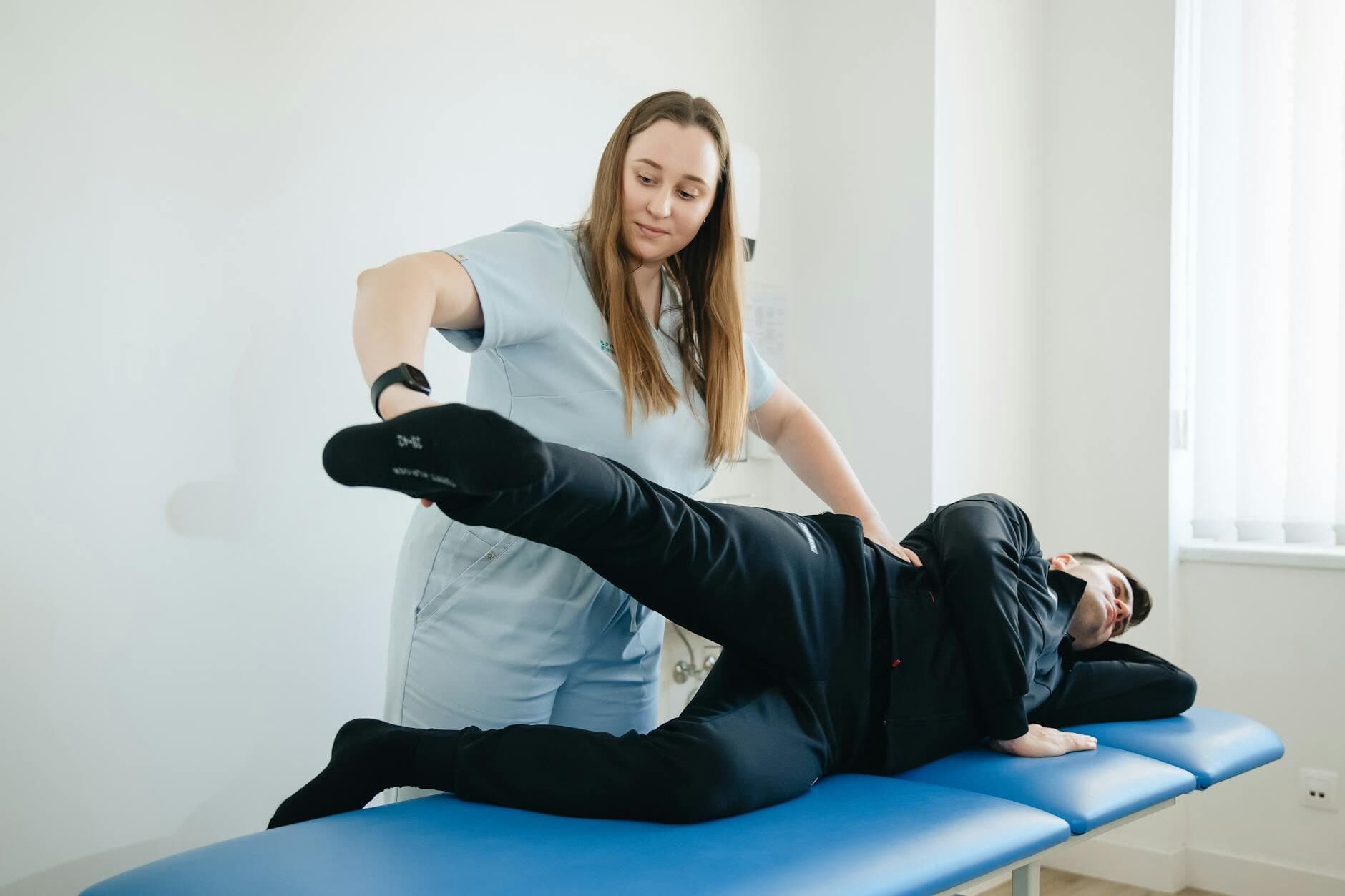
Pelvic Floor Physiotherapy Amsterdam: Incontinence and Pelvic Pain
What the Pelvic Floor Actually Is — and Why It Matters More Than You Think
The pelvic floor is not a single muscle. It is a layered hammock of twelve muscles, multiple fascial planes, and a dense network of nerves spanning from your pubic bone to your tailbone. Together, these structures support the bladder, bowel, uterus, and prostate; manage intra-abdominal pressure during every cough, lift, and sprint; and coordinate intimately with the diaphragm, deep abdominals, and lumbar spine to produce stable, fluid movement.
From a systems perspective, this matters enormously. The pelvic floor does not work in isolation. It is one node in a pressure-management system that runs from your breath down to your feet. When one part of that system loses range, load-tolerance, or sensory clarity, the whole adapts — and the symptoms that emerge (leaking, pain, heaviness, back ache) are the body’s best current solution to a problem it has not been able to resolve on its own. Our job is not to override those symptoms but to find the restriction that is generating them and give the system a more useful input.
Common Causes of Pelvic Floor Dysfunction
Pelvic floor problems are widespread across all genders and ages, yet they remain significantly undertreated — largely because people assume they are inevitable or embarrassing. They are neither. Understanding what drives dysfunction is the first step toward resolving it.
- Childbirth and pregnancy: Vaginal delivery, prolonged pushing, instrumental delivery, and even caesarean section (which disrupts abdominal fascial layers) all change the mechanical and neurological environment of the pelvic floor. Postpartum tissue is often simultaneously weakened and hypertonic — a nuance that generic “do your Kegels” advice completely misses.
- Chronic overactivation: Sustained stress, anxiety, or pain-protective postures can lock the pelvic floor in a high-tone state. Paradoxically, an overactive pelvic floor can cause urgency incontinence, pelvic pain, and pain during intercourse — the same symptoms people associate with weakness.
- Respiratory and pressure dysregulation: Habitual breath-holding, shallow chest breathing, or a poorly coordinated diaphragm all alter the pressure environment the pelvic floor must manage moment to moment.
- Sedentary loading patterns: Hours of sitting in lumbar flexion, combined with minimal variation in hip range of motion, progressively reduce the sensory input the pelvic floor receives — leading to poor motor recruitment when it is actually needed.
- Post-surgical changes: Hysterectomy, prostatectomy, hernia repair, and abdominal surgeries all leave fascial restrictions that can alter pelvic floor mechanics indirectly.
- Hormonal transitions: Perimenopause, menopause, and the postpartum period reduce oestrogen, affecting tissue elasticity and mucosal quality — both of which influence how pelvic floor muscles function and how they respond to loading.
Conditions We Assess and Help Resolve
Urinary Incontinence
Stress incontinence (leaking with coughing, sneezing, running, or lifting) and urgency incontinence (a sudden, compelling need to urinate that is difficult to defer) are among the most common presentations we see. Pelvic floor physiotherapy is the internationally recommended first-line treatment for both — and evidence consistently shows that a correctly structured programme can produce meaningful improvement within eight to twelve weeks for most people. Surgery is very rarely necessary when conservative management has been done thoroughly and correctly.
The key word is correctly. Effective treatment requires knowing whether the problem is one of underrecruitment, poor timing, overactivation, pressure dysregulation, or a combination. An internal and external assessment, combined with movement observation and sometimes real-time ultrasound, tells us far more than a symptom description alone.
Pelvic Pain, Pelvic Girdle Pain, and Pain During Intercourse
Chronic pelvic pain — including dyspareunia (pain during or after sex) and vaginismus — frequently originates from hypertonic, poorly coordinated pelvic floor muscles rather than from structural damage. Identifying and downregulating that excess tone, restoring normal neural input, and reintroducing graduated load can resolve symptoms that patients have sometimes carried for years.
Pelvic girdle pain during and after pregnancy is a closely related presentation. If you are currently pregnant and experiencing pelvic or groin pain, our article on pelvic girdle pain during pregnancy gives a detailed overview of what is happening and how targeted physiotherapy can help you stay active and comfortable.
Diastasis Recti and Postnatal Core Recovery
Abdominal separation is a normal adaptation of pregnancy, but the degree to which it affects function varies considerably between individuals. The gap itself is rarely the whole story — what matters more is whether the linea alba can generate sufficient tension to transfer load, and whether the deep abdominal and pelvic floor system is coordinating effectively again. We assess this clinically and design rehabilitation that matches where your system actually is, not where it theoretically should be at six weeks postpartum.
Lower Back Pain with a Pelvic Component
A significant proportion of lower back pain presentations involve pelvic floor dysfunction as a contributing or maintaining factor. We routinely integrate pelvic assessment into our broader lower back and hip work for exactly this reason. A spine that lacks a reliable base of pelvic support will continue to overload the same structures regardless of how much manual therapy or exercise it receives.
How We Find — and Resolve — the Root
The assessment begins well before any hands-on work. We observe how you breathe, how you load through your pelvis walking and transitioning between positions, and how your system responds to simple movement challenges. This gives us a working hypothesis about where the primary restriction lives.
Internal pelvic floor assessment — always explained fully and performed only with your clear consent — allows us to assess resting muscle tone, strength, endurance, coordination, and tissue quality across all three layers. We can also observe how the pelvic floor responds to a cough, a breath, and a sustained contraction, which often reveals the timing problem that drives the symptom.
Treatment is then built around the smallest effective input that allows the system to reorganize. That might mean teaching a coordinated breath-and-brace pattern that immediately changes how the pelvic floor fires during loaded movement. It might mean releasing a hypertonic muscle that has been preventing the deeper layers from activating. It might mean using fine acupuncture needles to reduce the local neural sensitivity that is maintaining a chronic pain cycle — a particularly useful approach for pelvic pain presentations where touch-based assessment itself provokes significant protective responses. In every case, we confirm the effect is real with a measurable change: improved range of motion, reduced pain on a specific test, or a visible change in how you move.
Self-Care and Simple Exercises
While a proper assessment is irreplaceable, there are evidence-informed strategies you can begin implementing now.
- Diaphragmatic breathing: Lie on your back, knees bent. Inhale slowly through the nose, allowing the belly and lower ribcage to expand in all directions. Feel the pelvic floor gently descend with the inhale and naturally recoil with the exhale. Practise 5–10 cycles before getting out of bed each morning. This is the foundational input for pelvic floor coordination.
- Timing your contractions correctly: Rather than isolated Kegel squeezes, practise “the knack” — a pre-contraction of the pelvic floor just before and during the moment of increased pressure (a cough, a sneeze, lifting a bag). This is a neurological skill, not just a strength exercise.
- Bladder diary for urgency: If urgency is your primary symptom, tracking fluid intake, timing, and urgency episodes for three to five days provides both you and your clinician with genuinely useful information about patterns and triggers.
- Hip and thoracic mobility: Gentle hip 90/90 stretches and thoracic rotation exercises maintain the range of motion the pelvic floor needs to function across its full length. Stiff hips and a restricted thorax consistently appear alongside pelvic floor dysfunction in clinical assessment.
- Avoid “just in case” urination: Going to the toilet frequently to pre-empt urgency gradually trains the bladder to signal at lower volumes. Where safe and appropriate, gently deferring the urge by 5–10 minutes and using slow diaphragmatic breathing to suppress it can help recalibrate bladder sensitivity over weeks.
When to Come In
Many people wait months or years before seeking help for pelvic floor symptoms — often because they have been told leaking after childbirth is normal, or that pelvic pain is “just how it is.” Normal means common; it does not mean inevitable or untreatable.
Consider booking an assessment if you experience any of the following: leaking with physical activity, coughing, or sneezing; a sudden, difficult-to-defer urge to urinate; pelvic heaviness or a sensation of prolapse; pain during or after sex; unexplained lower abdominal or groin pain; or if you are approaching six to eight weeks postpartum and have not yet had a pelvic assessment. In the Netherlands, you do not need a GP referral to see a physiotherapist — you can book directly, as explained in our guide to direct access physiotherapy in the Netherlands.
If you are managing symptoms alongside a broader musculoskeletal issue — hip, back, or lower limb — our approach to sports physiotherapy reflects the same root-cause reasoning applied to performance and loading contexts.
Frequently Asked Questions
Is internal assessment always necessary?
No. For many presentations, especially early-stage or where the primary driver appears to be systemic (breathing pattern, hip mobility, load management), a great deal can be achieved without internal work. When internal assessment would add meaningful clinical information and you feel comfortable proceeding, we will explain what it involves and obtain your clear consent beforehand. There is no pressure either way.
Do men develop pelvic floor dysfunction?
Yes — more commonly than is recognised. Post-prostatectomy incontinence, chronic pelvic pain syndrome, and erectile dysfunction all have significant pelvic floor components. The anatomy differs but the assessment and treatment principles are closely related.
How many sessions will I need?
This varies considerably depending on the complexity and duration of the problem. Straightforward presentations may show substantial improvement in four to six sessions. Chronic pain or post-surgical cases typically require a longer course. We will give you a realistic estimate after the first assessment and review progress at each session.
Can acupuncture help pelvic floor problems?
Fine needling can help reduce local tissue sensitivity, modulate the autonomic nervous system tone that is often elevated in chronic pelvic pain, and support the broader nervous system reorganization that physiotherapy is working toward. It is one tool among several — chosen when the clinical picture suggests it will offer a useful input, not as a routine add-on.
Pelvic floor problems are common, but they are not something you have to accept as a fixed part of your life. At Alter Physio & Acupuncture, we look for the system-level restriction that is generating your symptoms — and apply precisely what is needed to help your body find its own resolution. Meet our clinician and book your pelvic floor assessment in Amsterdam Zuid.