
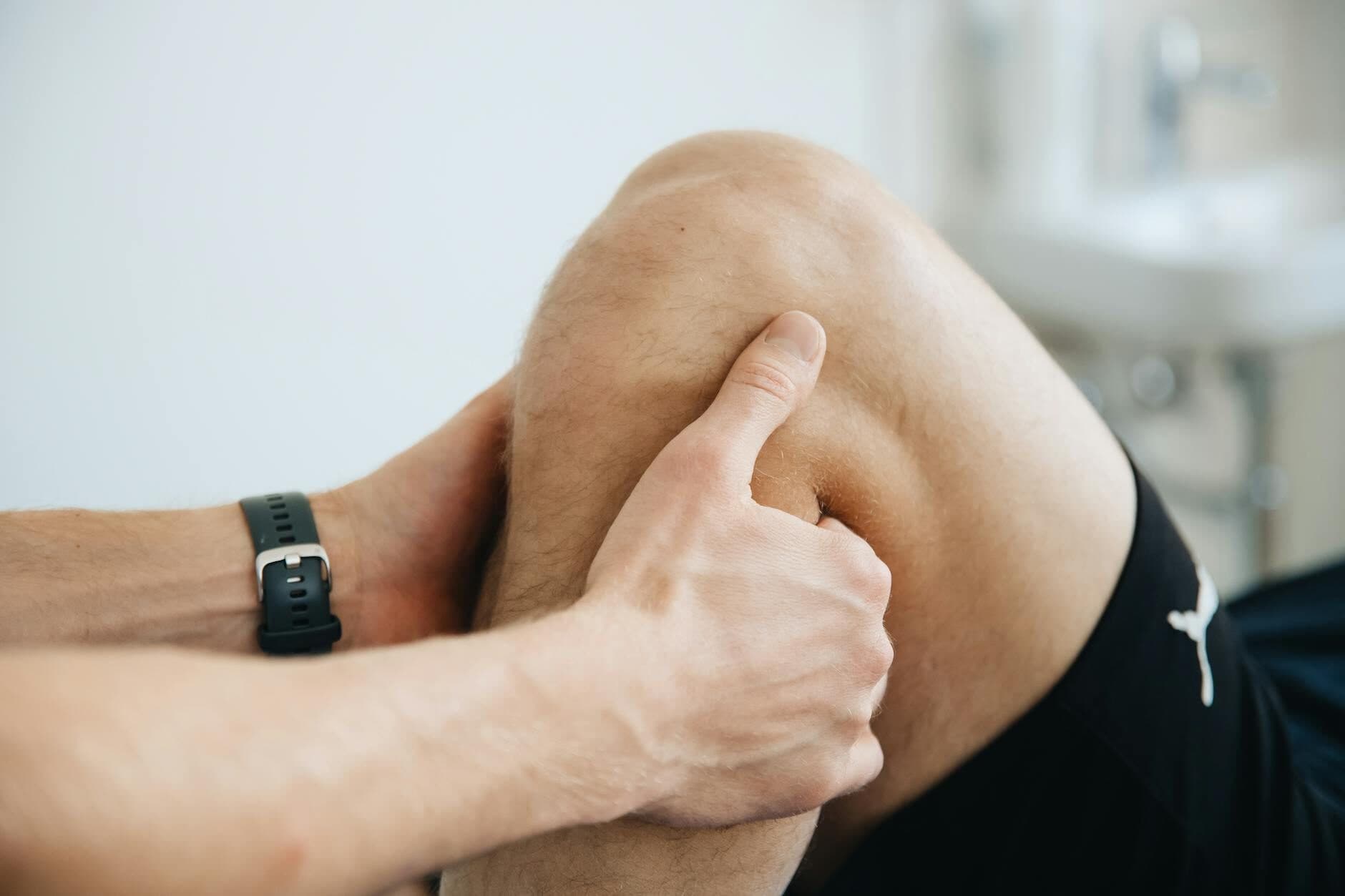
Hip Pain Physiotherapy Amsterdam: Diagnosis and Expert Treatment
Hip Pain: More Than a Joint Problem
Hip pain is one of the most common reasons people seek physiotherapy in Amsterdam — and one of the most misunderstood. It is rarely just a hip problem. The hip sits at the mechanical centre of the body, bridging the lumbar spine above and the knee and foot below. When something in that chain stops moving well — whether due to load, trauma, repetitive strain, or a quietly accumulating postural pattern — the hip is often where the system breaks down first and signals loudest.
At Alter Physio & Acupuncture, we work from a straightforward clinical principle: symptoms are outputs of an adaptive system doing its best under constraint. Our job is not simply to quiet the pain signal, but to find what the system is missing — a full range of movement, adequate load capacity, a clear sensory map — and provide the smallest precise input that lets everything reorganise. Often, that reorganisation is visible immediately in how you move and what you can feel. That is what “Heal the root. Not just the pain.” means in practice.
Understanding the Hip: Why It Fails the Way It Does
The hip is a ball-and-socket joint designed for both stability and wide-ranging mobility. It tolerates enormous compressive loads — roughly four to five times body weight during a single-leg stance phase of walking — while simultaneously requiring coordinated control from the gluteal muscles, deep rotators, hip flexors, adductors, and the thoracolumbar fascia. That combination of high load and high demand for control means there are many ways the system can become overwhelmed.
Two broad categories drive most hip pain presentations: structural load issues, where tissue is absorbing more stress than it can manage, and neuromotor control issues, where the brain’s movement programme for the hip has become restricted, guarded, or disorganised. In practice, most people have elements of both. A precise assessment separates them — because they require different primary inputs.
Common Causes of Hip Pain
Hip Osteoarthritis
Osteoarthritis (OA) is the most prevalent cause of hip pain in adults over 50, though it increasingly presents in active people in their forties. The cartilage within the joint thins and the surrounding tissues adapt, producing stiffness, reduced internal rotation, groin discomfort, and a characteristic loss of ease in tasks like putting on shoes or climbing stairs.
Crucially, cartilage change on an X-ray does not reliably predict pain or function. Many people with advanced radiological OA move well and hurt little; others with mild changes are significantly restricted. This tells us the nervous system’s interpretation of the joint environment matters as much as the structural picture. Physiotherapy — combining progressive loading, movement restoration, and where indicated manual therapy or acupuncture to down-regulate sensitised tissue — can meaningfully slow functional decline and reduce pain. Surgery is not the only path forward, and it is rarely the first.
Femoroacetabular Impingement (FAI)
FAI occurs when the shape of the femoral head, acetabulum, or both creates abnormal contact at end-range hip movement. The result is deep groin pain — sometimes described as a pinching sensation — that emerges with prolonged sitting, squatting, hip flexion under load, or rotation. It is increasingly diagnosed in younger, active adults, including cyclists, runners, and people who sit for long hours at a desk.
Not every FAI-positive scan requires surgery. Current evidence supports physiotherapy as a first-line approach: restoring movement quality, addressing muscular control around the pelvis, and modifying load patterns that repeatedly provoke impingement. We assess the full kinetic chain — because restricted ankle dorsiflexion, a stiff thoracic spine, or a weak contralateral hip often forces the symptomatic hip into the position that triggers pain.
Gluteal Tendinopathy and Trochanteric Bursitis
Lateral hip pain — typically over the greater trochanter, worse with lying on the side, crossing the legs, or climbing stairs — is most commonly driven by gluteal tendinopathy rather than bursitis, though both can coexist. Tendons become reactive when they experience compressive load they are not conditioned for, often combined with a sudden change in training volume, a period of reduced activity, or changes in walking mechanics.
The key clinical insight here is that compression, not just tension, is the primary driver. This means certain stretches and positions that feel intuitive — crossing the leg, deep hip adduction stretches — can actively worsen the tendon’s state. Treatment centres on graduated load management, targeted gluteal strengthening, and modification of compressive provocations. Learn more about how we assess and treat lateral hip pain at Alter Physio.
Hip Flexor and Groin Pathology
Pain at the front of the hip or in the groin can arise from hip flexor tendinopathy (iliopsoas), adductor-related groin pain, or — importantly — referred pain from the lumbar spine or a sports hernia. Each of these requires a different management strategy. A careful movement and provocation assessment is essential before beginning treatment, because loading an already sensitised iliopsoas tendon with aggressive stretching can set recovery back significantly.
Hip Pain Referred from the Lower Back and Pelvis
A substantial proportion of people presenting with hip pain are actually experiencing referred symptoms from the lumbar spine, sacroiliac joint, or hip flexor chain tightness secondary to a lower back restriction. The L3 and L4 nerve roots, in particular, refer pain into the anterior thigh and hip region in patterns that closely mimic true hip pathology. If you have also experienced lower back pain, it is well worth having both regions assessed together — treating the hip in isolation when the lumbar spine is the primary driver will produce limited and short-lived results.
How We Find and Resolve the Root
Assessment: Reading What the System Is Telling Us
A thorough assessment begins well before hands are laid on. We observe how you walk into the room, how you sit, how you transition from sitting to standing. These unrehearsed movement patterns often reveal more than a formal test. We then move into structured assessment: range of motion at the hip, pelvis, lumbar spine, and thorax; muscle length and strength testing; provocation tests for specific tissues; and a neurological screen where relevant.
Where useful, we use real-time re-tests throughout the session — making a specific input and immediately checking whether your range of motion, pain level, or movement quality changes. If it does, we have found something the system can use. If it does not, we keep looking. This approach keeps treatment precise and avoids the trap of applying generic protocols to individual bodies.
Treatment: Choosing the Right Tool
The tool is always chosen by the reasoning, not by habit. For one person, the primary restriction might be a loss of internal rotation that responds immediately to a specific mobilisation technique. For another, it is a sensitised nervous system pattern — guarding that has outlasted its usefulness — where fine Japanese acupuncture needles applied with minimal stimulation can shift the tissue state in a way that then allows movement work to progress. For a third, it is a missing motor programme: the glutes are present but not recruited at the right moment in the gait cycle, and the treatment is a specific, well-timed loading exercise that rebuilds that pattern.
We also address the broader context: running mechanics, workstation setup, training load progression, footwear. A hip that heals in the clinic but returns to the same environment that overloaded it will simply repeat the cycle. Read more about our approach to hip pain treatment in Amsterdam.
Self-Care and Simple Exercises
These suggestions are general in nature. They are not a substitute for individual assessment and may not be appropriate for every presentation.
- Hip 90/90 rotational breathing: Lie on your back, knees bent and feet flat. Gently rotate both knees to one side, keeping the pelvis as still as possible. Take three to four slow, full breaths into the side of the ribcage facing the ceiling. Return to centre and repeat the other side. This helps restore rotational movement and reduces resting tension in the hip rotator complex.
- Isometric hip abduction: Standing beside a wall, press the outer surface of the hip gently against the wall for eight to ten seconds, maintaining a neutral pelvis. Repeat six to eight times each side. Isometrics can reduce pain and begin to build load tolerance in reactive tendons without provoking compression.
- Single-leg balance with focal attention: Stand on one leg for twenty to thirty seconds, eyes open, focusing on keeping the pelvis level. Progress by adding a slow arm reach in different directions. This rebuilds the neuromotor map of the hip without heavy load — often a missing piece in chronic hip presentations.
- Modify compressive positions: If you have lateral hip pain, avoid crossing your legs, avoid deep hip adduction stretches, and try sleeping with a pillow between your knees. These changes reduce the compressive load on the gluteal tendons and can make a meaningful short-term difference.
When to Come In
Hip pain warrants a proper assessment when it has persisted for more than two to three weeks without clear improvement, when it is affecting your sleep, your ability to walk comfortably, or your capacity to do the activities that matter to you. It also warrants prompt review if the pain is severe, associated with any groin swelling, came on following a fall or impact, or is accompanied by fever or night sweats — these patterns require medical evaluation.
If you are managing the discomfort day to day but noticing that your movement is slowly becoming more restricted, that is also a signal worth acting on early. The longer a protective movement pattern embeds, the more work is required to reorganise it.
Frequently Asked Questions
How long does hip pain typically take to resolve?
This depends heavily on the cause, duration, and your overall health and activity level. Acute presentations with a clear mechanical trigger often show significant improvement within four to eight sessions. Longer-standing conditions — osteoarthritis, chronic tendinopathy — typically require a more extended programme focused on progressive loading and movement restoration. We will give you an honest prognosis after your first assessment.
Can acupuncture help hip pain?
Japanese acupuncture can be a useful input for hip pain, particularly when the dominant pattern involves sensitised tissue, guarded muscle tone, or a nervous system that is not responding well to movement-based approaches alone. It is not a standalone treatment here — it is one tool within a clinical reasoning process, selected when the assessment suggests it is the appropriate next input.
Do I need an X-ray or MRI before coming in?
Not necessarily. Many hip presentations can be accurately assessed and managed without imaging. We will advise you if imaging is likely to change the clinical picture meaningfully. If you have existing scans, bring them — they add useful context, though they do not replace the movement assessment.
Is hip pain related to RSI or repetitive strain from desk work?
Yes, in some cases. Prolonged sitting in a fixed position can create cumulative load changes in the hip flexors, deep rotators, and gluteal tendons. If your hip pain worsens after long periods at a desk, this is worth exploring. You may also find it useful to review our page on RSI treatment in Amsterdam, which covers how repetitive patterns affect the musculoskeletal system more broadly.
Take the Next Step
Hip pain does not resolve by waiting for it to become more bearable. If your movement is being shaped around an uncomfortable joint, the pattern will deepen — and the gap between where you are and where you want to be will widen. A single thorough assessment can clarify what is actually driving your symptoms, what a realistic recovery looks like, and what you can do today to begin shifting the pattern.
If you are ready to understand what your body is actually telling you, book an assessment with Hidekazu at Alter Physio & Acupuncture in Amsterdam Zuid. We will find the root. Then we will address it.