
Acupuncture for Hay Fever and Allergies in Amsterdam
Hay Fever and Allergies in Amsterdam: What You’re Actually Dealing With
Amsterdam’s canal-side trees, expansive parks, and surrounding polder grasslands make it one of the more challenging cities in the Netherlands for allergy sufferers. Birch and alder pollen typically arrive in February and March, grass pollen peaks through May and June, and weed pollens extend the season well into September. For a significant portion of the population, this means months of sneezing, itchy and streaming eyes, nasal congestion, post-nasal drip, and a low-grade fatigue that quietly erodes concentration, sleep quality, and daily life.
What’s less often discussed is how hay fever interacts with the nervous system. The chronic inflammatory load, the broken sleep, the constant low-level irritation — all of these push the autonomic nervous system toward a state of sustained sympathetic activation. That state, in turn, can make the immune system’s threshold for over-reaction even lower. You’re not just dealing with pollen; you’re dealing with a system that has become sensitised and somewhat stuck in a reactive pattern.
Antihistamines and nasal corticosteroids are useful tools, and we’d never advise you to abandon something that’s working. But they are primarily downstream interventions — they suppress the output without addressing why the system became so reactive in the first place. That distinction is exactly where a root-cause assessment adds value.
Understanding the Root: Why Does the Immune System Over-React?
Allergic rhinitis is, at its core, a case of mistaken identity. The immune system classifies harmless pollen proteins as threats, mounts an IgE-mediated response, and triggers mast cells to release histamine and a cascade of inflammatory mediators. The result is the familiar constellation of symptoms. But the more important clinical question is: what made this person’s immune system cross that threshold?
Several factors are well-supported by research as contributors to allergic sensitisation and severity:
- Autonomic dysregulation: A nervous system chronically tilted toward sympathetic dominance tends to promote Th2-skewed immune responses — the branch of immunity most associated with allergic and atopic conditions. Stress, poor sleep, and sustained high cognitive load are common drivers in an urban professional population.
- Gut-immune axis disruption: The gut microbiome plays a measurable role in immune regulation. Antibiotic exposure, a low-fibre diet, and chronic stress all reduce microbial diversity in ways that correlate with increased atopic risk.
- Reduced vagal tone: The vagus nerve is the primary brake on systemic inflammation. When vagal tone is low — often visible in reduced heart rate variability — the body’s ability to down-regulate its own inflammatory response is compromised.
- Prior respiratory or sinus dysfunction: Structural or functional restrictions in breathing patterns can increase mucosal sensitivity and reduce the nasal airway’s natural filtration and humidification capacity.
None of these factors show up on a standard allergy panel, yet each one shapes how severely a person experiences their hay fever — and how well they respond to treatment.
How We Find and Resolve the Primary Restriction
At Alter, the first step is always assessment — not treatment. We want to understand your specific pattern: when symptoms are worst, how your sleep is affected, whether stress reliably amplifies your reactions, what your breathing mechanics look like, and how your nervous system is currently calibrated. This tells us where the most upstream restriction is likely to sit.
For many hay fever patients, the most effective entry point is the autonomic nervous system. When we can shift the system toward greater parasympathetic tone — measurable through changes in breathing rate, muscle tension, and reported symptom intensity — the immune threshold often rises and symptoms become less severe. We look for confirmation of this immediately within the session: Does nasal airflow change? Does facial pressure reduce? Does a tight upper trapezius (a reliable proxy for sympathetic load) soften?
The specific tools we use are chosen by that reasoning, not by habit or protocol:
Japanese Acupuncture
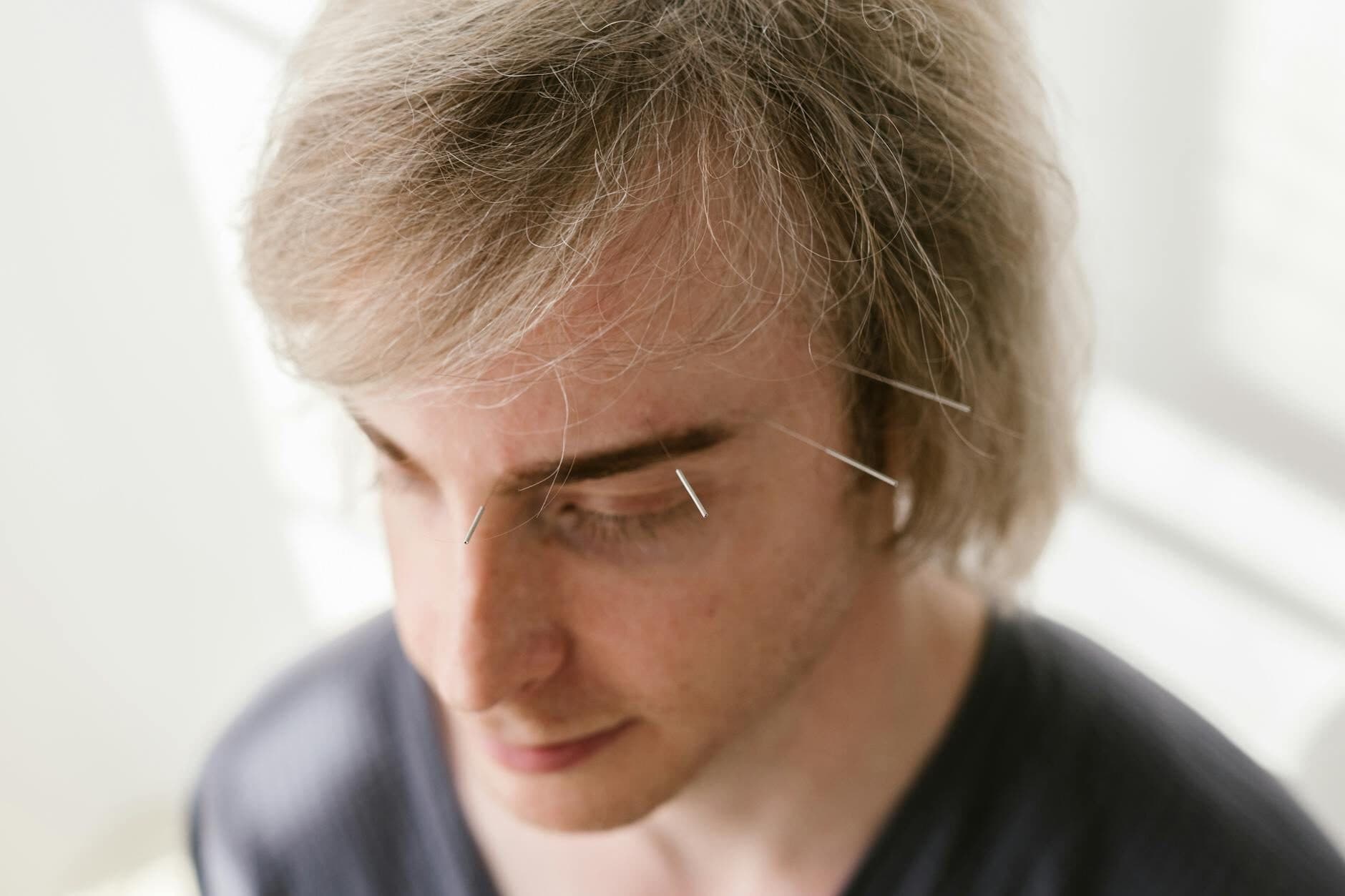
Japanese acupuncture uses exceptionally fine needles and precise, minimal stimulation to produce measurable neurological and physiological effects. Relevant research suggests that acupuncture can modulate IgE-mediated responses, reduce histamine release from mast cells, and influence the activity of inflammatory cytokines such as IL-4 and IL-13 — key drivers of the Th2 allergic cascade. It also directly engages the autonomic nervous system via afferent nerve fibres, which is why we often see immediate, objective changes in the room: nasal passages that open, breathing that deepens, a visible drop in facial tension.
Points around the sinuses, the upper thorax, and specific distal locations are combined based on your individual presentation. If you’re curious about how this approach differs from the Chinese acupuncture style you may have encountered elsewhere, this article explains the clinical distinctions in detail.
For preventive effect, we typically recommend beginning treatment four to six weeks before your primary pollen season. This is not arbitrary — it allows time for cumulative neurological adaptation rather than simply firefighting active symptoms.
Physiotherapy and Breathing Work
Dysfunctional breathing patterns — particularly chronic mouth breathing, upper-chest dominance, or breath-holding — are surprisingly common in allergy sufferers and can maintain the very nasal congestion that drives them. Physiotherapy assessment identifies these patterns, and targeted breathing retraining can restore nasal airway function, improve CO₂ tolerance, and reduce the chronic sympathetic load. This is not relaxation advice; it is specific, progressive, measurable work.
Lifestyle and Gut-Immune Support
We integrate evidence-informed dietary and lifestyle guidance where relevant. Increasing dietary fibre diversity, reducing ultra-processed food intake, and managing sleep architecture all have downstream effects on immune regulation. We don’t make sweeping claims — the effect sizes vary — but for patients whose allergic burden is high, these factors are worth addressing systematically alongside the direct interventions.
Conditions We Work With
Seasonal allergic rhinitis (hay fever from grass, tree, and weed pollens) is the most common presentation, but the same root-cause reasoning applies to year-round allergies involving dust mites, pet dander, and mould. Atopic dermatitis and allergic asthma frequently coexist with hay fever as part of the same underlying Th2 immune skew — what clinicians call the atopic march. Addressing the systemic pattern rather than each condition separately is often more effective and more efficient.
It’s also worth noting the significant overlap between allergic sensitisation and stress or burnout. A nervous system under sustained high load is a more reactive immune system. If you recognise that your hay fever is considerably worse in high-stress periods, that is clinically meaningful information. Our approach to stress and burnout often intersects directly with allergy management for this reason.
Self-Care and Practical Steps Between Sessions
These are not substitutes for a proper assessment, but they can meaningfully support your progress:
- Nasal rinsing (saline irrigation): Daily use of a neti pot or saline spray reduces mucosal allergen load and supports the nasal airway’s natural filtration. Use isotonic or slightly hypertonic saline solution.
- Nasal breathing practice: Consciously defaulting to nasal breathing during the day — including during light exercise — helps maintain mucosal warmth, humidity, and filtration. Begin with periods when you’re relaxed before progressing to activity.
- Extended exhale breathing: A simple 4-second inhale, 6-to-8-second exhale pattern, practised for five minutes twice daily, is one of the most direct ways to increase parasympathetic tone. This is measurable — heart rate slows on the exhale.
- Morning shower before going outside: Rinsing pollen from hair and skin first thing reduces cumulative allergen exposure, particularly relevant during high-count days.
- Track your triggers: Keep brief notes on symptom severity alongside sleep quality, stress level, and diet. Patterns emerge quickly and make your assessment appointments considerably more productive.
When to Come In
Consider booking a proper assessment if any of the following apply:
- Your symptoms are poorly controlled on antihistamines, or you’d prefer to reduce your dependence on medication
- Your hay fever reliably disrupts sleep, concentration, or exercise capacity
- Symptoms persist beyond the expected pollen season, or seem to worsen year on year
- You also experience eczema, asthma, or recurrent sinus infections
- You notice a clear link between stress levels and symptom severity
- You’re approaching pollen season and want to build a preventive buffer rather than reactive management
Frequently Asked Questions
How quickly does acupuncture work for hay fever?
Some patients notice a change in nasal airflow and facial pressure within a single session. Sustained reduction in reactivity typically requires a course of treatment — often four to eight sessions — with the best outcomes seen when treatment begins before the season peaks. Results vary between individuals and we don’t make guarantees, but an initial session will give you a clear sense of how your system responds.
Can I continue taking antihistamines while receiving acupuncture?
Yes. There is no contraindication. Many patients use acupuncture to reduce the dose they need over time rather than stopping medication abruptly. This is a conversation to have with your GP as well as with us.
Is Japanese acupuncture painful?
Japanese acupuncture uses significantly finer needles and lighter stimulation than most Western or Chinese styles. Most patients describe the sensation as minimal — occasionally a brief dull pressure or warmth, but rarely sharp discomfort. Many find the sessions noticeably calming.
Do I need to come in every year?
Some patients find that after a full course of treatment their overall reactivity decreases durably. Others benefit from a shorter maintenance course at the start of each season. Your clinician will discuss what makes sense for your pattern after the initial assessment.
If you’re ready to understand what’s actually driving your allergy response — and to build a plan that addresses it at the root — book an assessment with Hidekazu. A single session is enough to establish whether this approach is a good fit for you, and to give you something concrete and measurable to work with from day one.