
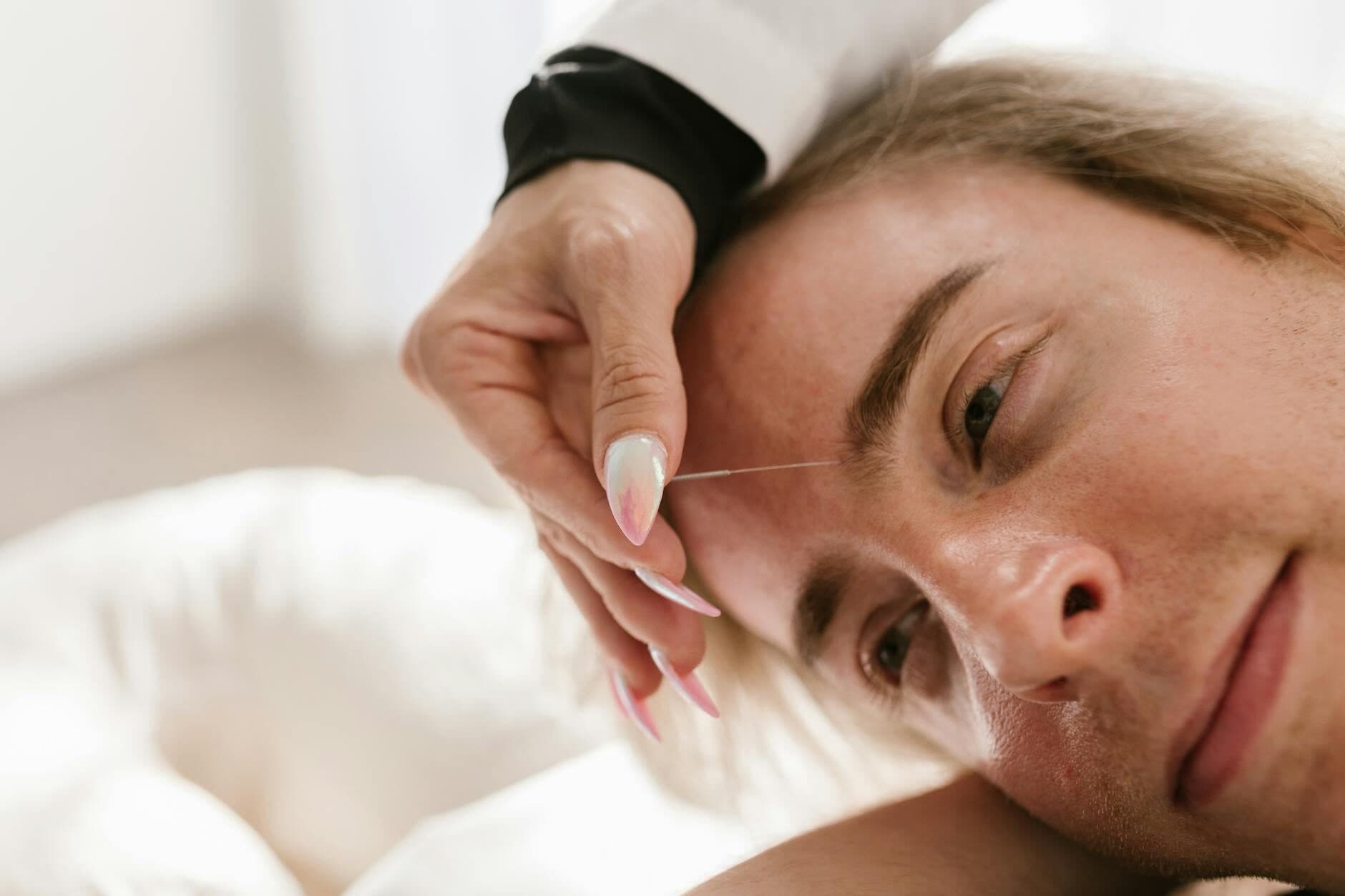
Acupuncture for Insomnia Amsterdam: Sleep Better Naturally
Insomnia and Sleep Problems: A Common Challenge
Poor sleep is one of the most common complaints we hear at our clinic in Amsterdam Zuid — and one of the most underestimated. Insomnia affects a significant proportion of adults, and its consequences extend far beyond feeling tired. Impaired concentration, low mood, reduced immunity, slower physical recovery, and an increased vulnerability to anxiety and depression are all well-documented effects of chronic sleep disruption. Yet for many people, the only option they have been offered is a sleep medication that dulls the symptom without addressing what is actually driving it.
That is exactly the problem we want to solve. The body is a self-organizing system, and disrupted sleep is rarely arbitrary. It is an output — a signal that something upstream has shifted: a nervous system locked in high alert, a hormonal rhythm that has lost its timing, a pain pattern that pulls you out of deep sleep, or a stress load the system simply cannot down-regulate at night. Finding and resolving that upstream driver — not just quieting the symptom — is what we mean when we say heal the root, not just the pain.
What Is Insomnia — and Why Does It Persist?
Insomnia is broadly defined as difficulty initiating sleep, maintaining sleep, or waking too early, occurring at least three nights per week and lasting long enough to affect daytime functioning. It becomes chronic when this pattern continues for three months or more. But from a clinical perspective, the more useful question is not how long the problem has been present — it is what is keeping the system in this state?
Sleep is not a passive process. It requires an active shift in the nervous system away from sympathetic dominance — the alert, reactive mode associated with stress — toward parasympathetic regulation, the state in which the body repairs, consolidates memory, and restores itself. When that shift is impaired, sleep either doesn’t come or doesn’t hold. The system stays vigilant when it should be releasing.
Several layers can prevent this shift from happening reliably:
- Autonomic dysregulation: Chronic stress, overwork, or unresolved anxiety can keep the sympathetic nervous system in a semi-activated state around the clock, making the transition to sleep physiologically difficult.
- Hormonal disruption: Cortisol that remains elevated in the evening, or melatonin that is produced too late or in insufficient amounts, disrupts the timing of the sleep-wake cycle.
- Physical restriction or pain: Neck tension, thoracic stiffness, or lower back discomfort that is manageable during the day can become a significant barrier to sleep when the body is still and sensory input is reduced.
- Sensitised nervous system patterns: After months of poor sleep, the nervous system can learn to associate the bed with wakefulness and arousal — a conditioned pattern that perpetuates the problem even when the original cause has partly resolved.
Common Causes We See in Practice
Stress-Related and Anxiety-Driven Insomnia
The most frequent presentation we see is someone who lies awake with a racing mind, unable to switch off. The body is physiologically prepared for sleep — tired, horizontal, in a dark room — but the nervous system is still running. This is classic sympathetic over-activation. The challenge is not willpower or better sleep hygiene alone; it is that the system needs a different input to reorganize. Acupuncture, applied at specific sites associated with autonomic regulation, combined with calibrated breathwork, can provide exactly that input — often with a measurable shift in how the body feels within the session itself.
Hormonal Sleep Disruption
Perimenopause and menopause are among the most common — and most disruptive — hormonal drivers of poor sleep in women. Night sweats and hot flushes fragment sleep architecture, preventing the deeper restorative stages. The downstream effects on mood, cognition, and physical resilience compound quickly. Acupuncture has a meaningful evidence base in this area, with studies suggesting it can help modulate vasomotor symptoms and support more stable sleep patterns. You can read more about this in our guide to acupuncture for menopause symptoms in Amsterdam.
Pain-Driven Sleep Disruption
Neck pain, shoulder tension, thoracic stiffness, and lower back discomfort frequently present alongside insomnia — sometimes as a cause, sometimes as a consequence, often as both. When the body cannot find a comfortable position, or when pain triggers a micro-arousal that pulls you out of deeper sleep stages, rest becomes fragmented. Addressing the physical restriction directly — through movement assessment, hands-on work, and needling where appropriate — removes one of the barriers to sleep without adding a new variable.
Restless Legs and Nocturnal Tension
Some people describe an inability to settle — legs that need to move, muscles that twitch or cramp, a physical restlessness that prevents onset or continuation of sleep. While restless legs syndrome has a neurological component that always warrants medical assessment, many presentations of nocturnal muscular tension respond well to an integrative approach targeting both the local tissue and the nervous system state driving it.
How We Find and Resolve the Root
Our starting point is always an assessment, not a protocol. We want to understand the specific configuration of your sleep problem: when it started, what the pattern looks like across the night, what else is happening in the body and life context around it. Sleep complaints rarely exist in isolation — they are usually one thread in a larger pattern.
From that picture, we identify what we call the primary restriction: the factor most likely to be maintaining the system in a state that cannot support sleep. That might be a persistently elevated stress response that needs a direct parasympathetic input. It might be a movement restriction in the cervical spine that is feeding low-grade sensory noise into the nervous system at night. It might be a hormonal rhythm that has lost its timing and needs support to re-synchronize.
The intervention follows the reasoning. Japanese acupuncture, which we use at Alter, is particularly well-suited to nervous system work — it uses finer needles, lighter stimulation, and a more immediate feedback loop, making it precise for conditions where the nervous system itself is the target. But the needle is never the point of departure. It is chosen because, in this case, for this person, it is the most direct path to the change we are looking for. Movement, breathwork, and hands-on work are equally available and often used in combination.
One of the markers we use to confirm we have found the right input is an immediate, measurable change — a shift in how the body holds itself, a change in range of motion, or a palpable release of tension. This is not intuitive guesswork; it is a way of checking our clinical reasoning in real time. For more detail on how acupuncture supports sleep physiology specifically, see our dedicated page on acupuncture for sleep problems in Amsterdam.
How Acupuncture Supports Sleep — The Physiology
The mechanisms by which acupuncture can support sleep are increasingly well-studied. Relevant pathways include:
- Autonomic regulation: Needling at specific sites has been shown to increase parasympathetic tone and reduce sympathetic dominance — precisely the shift the nervous system needs to enter and maintain sleep.
- Cortisol modulation: Research suggests that acupuncture may help normalise evening cortisol levels. Since cortisol naturally peaks in the morning and declines toward night, a flattened or dysregulated curve is a significant barrier to sleep onset.
- Melatonin and serotonin: Studies indicate acupuncture may support endogenous melatonin production and improve serotonin availability — the neurotransmitter that converts to melatonin in the pineal gland at night and underpins mood regulation during the day.
- Pain and sensory quieting: By reducing afferent sensory load from restricted or sensitised tissues, acupuncture can lower the background noise that keeps the nervous system from downshifting.
We present this physiology not to overclaim, but to explain the reasoning. Acupuncture is not a sedative — it does not force sleep. It works by removing obstacles to a process the body is already trying to accomplish. That distinction matters, and it is why results tend to be more durable than pharmacological suppression of symptoms.
Self-Care and Simple Exercises to Support Your Sleep
What happens between sessions matters as much as what happens during them. These evidence-informed strategies can meaningfully support your nervous system’s ability to shift toward sleep:
Physiological Sigh (4-2-8 Breathing)
Inhale through the nose for 4 counts, add a short second inhale to fully inflate the lungs, then exhale slowly through the mouth for 8 counts. The extended exhale activates the vagus nerve and reduces heart rate. Two to three minutes of this before bed is one of the fastest autonomic down-regulation tools available without equipment.
Cervical Mobility Release
Sit upright in a chair. Slowly take your right ear toward your right shoulder, hold for five slow breaths, and return. Repeat on the left. Then gently rotate your chin toward each shoulder, holding briefly. This is not stretching — it is slow, controlled sensory input that can reduce the afferent tension feeding the nervous system from a habitually stiff neck.
Consistent Sleep and Wake Anchoring
The most powerful zeitgeber — time-cue — for the circadian system is light exposure in the morning and a consistent wake time, even after a poor night. Resisting the urge to compensate with extended morning sleep helps prevent the rhythm from drifting further. Keeping the wake anchor stable is often more effective than managing bedtime.
Temperature and Wind-Down
Core body temperature needs to drop by approximately one degree Celsius to initiate sleep onset. A warm bath or shower 60–90 minutes before bed paradoxically accelerates this by drawing blood to the periphery and facilitating heat dissipation. Keeping the bedroom cool supports the continuation of sleep through the night.
Reduce Sensory Load in the Evening
Bright overhead lighting, blue-spectrum screens, and cognitively demanding content all delay melatonin onset. Shifting to warmer, lower lighting after sunset and choosing less activating content in the 90 minutes before bed is simple and has a measurable effect on sleep onset latency.
When to Come In
Self-care strategies are valuable, but they work best when the underlying system is responsive. If your nervous system is significantly dysregulated, if hormonal changes are driving the disruption, or if pain is fragmenting your sleep, these tools may not be sufficient on their own.
We recommend booking an assessment if:
- You have had difficulty sleeping for more than three weeks despite reasonable sleep hygiene
- Your sleep is being disrupted by physical discomfort, tension, or restlessness
- You are in perimenopause or menopause and experiencing night sweats or fragmented sleep
- You are managing stress or anxiety that reliably prevents you from switching off at night
- You have been using sleep medication and want to explore whether there is a root cause to address
- Daytime functioning — mood, concentration, energy, physical performance — is being meaningfully affected
Many patients notice a shift in sleep quality within the first few sessions. A fuller course of treatment — typically six to eight sessions — allows the system to consolidate the change rather than simply responding acutely. We also integrate guidance on movement, breath, and daily rhythm throughout, so the work extends well beyond the clinic room. For a broader look at how acupuncture supports sleep, you may also find our guide to acupuncture for sleep in Amsterdam useful.
Frequently Asked Questions
How many sessions will I need before I notice a difference?
This varies by person and by the complexity of the underlying pattern. Many patients report a noticeable shift — feeling calmer, falling asleep more easily, or waking less frequently — within two to four sessions. For chronic or complex insomnia, a course of six to eight sessions is typically recommended to allow the changes to become more self-sustaining.
Is acupuncture for sleep evidence-based?
A growing body of research supports acupuncture’s role in improving sleep quality, reducing sleep onset latency, and supporting autonomic regulation. As with most complex interventions, the evidence base is still developing, and we are careful not to overstate certainty. What we can say is that the physiological mechanisms are plausible, the clinical evidence is encouraging, and our approach is grounded in measurable outcomes within each session.
Can I combine acupuncture with my current sleep medication?
In most cases, yes — but this should always be discussed with your prescribing doctor. We do not advise patients to discontinue medication without medical supervision. Our role is to address the underlying drivers of poor sleep so that, over time, dependence on medication may reduce naturally. We are happy to communicate with your GP or specialist if that is helpful.
Do you treat children or teenagers with sleep problems?
We primarily work with adults. For younger patients, we recommend consulting a paediatrician or specialist in paediatric sleep medicine first, and we are happy to discuss whether a referral or coordinated approach might be appropriate.
What makes your approach different from a standard acupuncture clinic?
We do not begin with a treatment modality and apply it to a complaint. We begin with an assessment of the whole system — how you move, how your nervous system responds, what the dominant pattern is — and then choose the smallest, most targeted input that is likely to shift that pattern. The tools we use, whether fine needles, hands-on work, movement, or breath, follow that reasoning. The goal is always a measurable change you can feel and we can observe, not a treatment delivered on a fixed schedule regardless of response.
If persistent poor sleep is affecting your quality of life, we would welcome the chance to understand what is driving it and work with you on resolving it properly. Book a consultation with Hidekazu at Alter Physio & Acupuncture in Amsterdam Zuid — and take the first step toward sleep that restores, rather than simply interrupts your nights less.