
Seitai in Amsterdam: What Japanese Bodywork Is (and How It Differs from Chiropractic)
You have had physiotherapy, maybe a few massages, perhaps a chiropractor. Things improved for a while, but the same tightness keeps coming back: a stiff upper back after long days at the laptop, a hip that never feels quite even, a body that feels “braced” even when you are resting. If you grew up in Japan, or have spent time there, you may have thought: what I really need is a good seitai session.
Seitai (整体, literally “ordering the body”) is one of the most popular forms of hands-on care in Japan, yet it is still largely unknown in the Netherlands. This article explains what seitai is, how it differs from chiropractic and osteopathy, what the evidence does and does not say, and when it makes sense to combine it with physiotherapy and Japanese acupuncture.
What is seitai?
Seitai is a family of Japanese manual therapy approaches that developed in the early 20th century, drawing on traditional Japanese massage (anma), martial arts bodywork and, later, ideas imported from Western osteopathy and chiropractic. There is no single “official” seitai method. Different schools emphasise different things, from gentle positioning and breathing to firmer joint work.
What most styles share is a focus on the whole body rather than the painful spot alone. A seitai practitioner looks at how you stand, breathe and move, and asks why one area is working too hard. The neck may be tense because the ribcage does not move; the lower back may ache because the hips no longer rotate freely.
Seitai as we use it at Alter Physio & Acupuncture
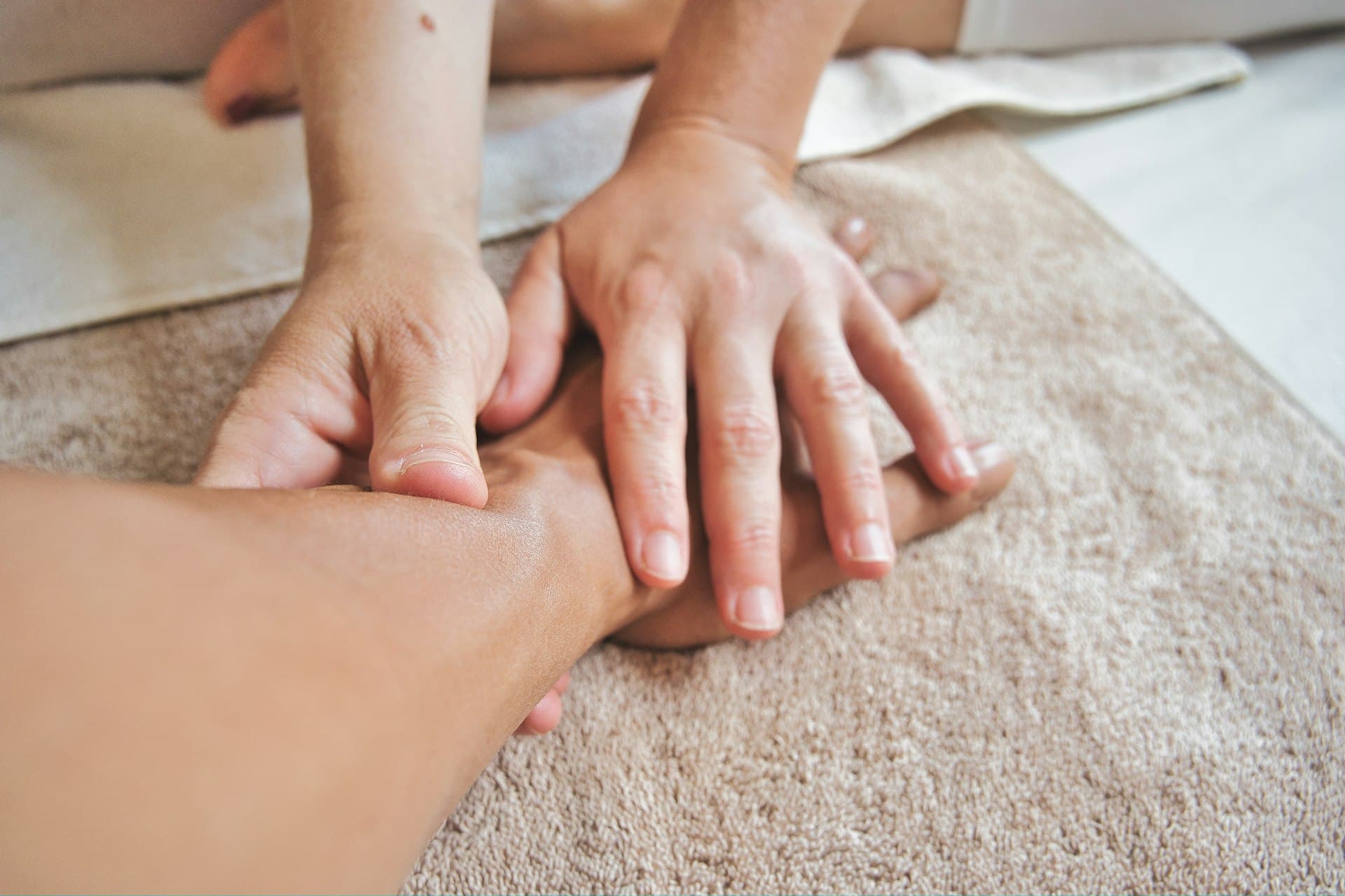
At our clinic in Amsterdam Zuid, seitai (Japanese osteopathy) is a gentle, non-forceful approach. We do not use high-velocity “cracking” thrusts and we do not claim to put bones back in place. Instead, we use slow, precise contact and guided movement to help the nervous system let go of protective tension, so movement becomes easier and more coordinated.
Seitai vs chiropractic vs osteopathy
People often ask whether seitai is “Japanese chiropractic”. The short answer is no, although there is overlap.
| Typical chiropractic | Typical osteopathy | Gentle seitai | |
|---|---|---|---|
| Main idea | Restoring joint movement, often of the spine | Whole-body mechanics and tissue mobility | Whole-body balance and coordination |
| Common techniques | High-velocity thrusts (adjustments) | Mobilisation, soft tissue, some thrusts | Slow pressure, positioning, guided movement, breathing |
| Feeling during treatment | Quick, sometimes with an audible “pop” | Varies | Calm, often surprisingly subtle |
| Regulation in the Netherlands | Not a BIG-registered profession | Not a BIG-registered profession | Not a regulated profession |
Every style varies by practitioner, so treat this table as a general guide rather than a rule.
A note on safety and regulation
In Japan, seitai is not a nationally licensed profession, unlike acupuncturists (harikyūshi) or massage therapists (anma massage shiatsushi). In 2017 Japan’s Consumer Affairs Agency issued a public warning after receiving reports of injuries from manual treatments given without a legal qualification, including some seitai and chiropractic.
The lesson is not that seitai is dangerous, but that who gives it matters. At Alter Physio & Acupuncture, seitai is only used as part of care by practitioners with a clinical background in physiotherapy or licensed Japanese acupuncture, after a proper assessment that screens for warning signs.
What does the evidence say?
We want to be honest here. There are very few high-quality clinical trials on seitai as a named method, so we cannot point to studies that “prove” seitai works for a specific condition.
What we do know comes from the broader research on manual therapy:
- Manual therapy seems to work largely through the nervous system. A widely cited model by Bialosky and colleagues (2009, Manual Therapy) suggests that hands-on treatment changes pain processing, muscle tone and the brain’s sense of threat, rather than physically “realigning” structures.
- Hands-on care works best combined with active rehab. Guidelines such as the UK’s NICE guideline on low back pain (NG59) recommend manual therapy only as part of a treatment package that includes exercise, not as a stand-alone fix.
- Gentle techniques carry a lower risk profile. Most side effects of manual therapy are mild and short-lived (soreness or tiredness), and serious complications are mainly discussed in relation to forceful neck manipulation, which we do not use.
That is why, in our clinic, seitai is a tool to prepare the body for movement, never a replacement for it.
Who might benefit from seitai?
Seitai tends to suit people whose problem is less about one clear injury and more about a body that has been stuck in protection mode. We often see it help as part of care for:
- Recurring neck, shoulder and upper back tension, especially in desk-based expats in Zuidas and Zuid
- Lower back stiffness that returns despite doing your exercises
- Feeling uneven or “twisted”, for example one hip or shoulder that never feels the same as the other
- People who react badly to strong treatment: deep massage or manipulation leaves you sore for days
- Stress-related body tension, where poor sleep and a busy life show up as tight jaws, shallow breathing and a stiff ribcage
- Athletes between sessions, to restore ease of movement after heavy training blocks
When seitai is not the right first step
Some situations need medical assessment before any manual therapy. Contact your GP (huisarts) or emergency services if you have back or neck pain with numbness in the groin area, new bladder or bowel problems, progressive weakness in the legs, unexplained weight loss, fever, or pain after a significant fall or accident. Severe osteoporosis, recent fractures and some vascular conditions also need a different approach. Your practitioner should always screen for these first.
What happens during a seitai session?
A session at our clinic usually follows this pattern:
- Conversation and assessment. We ask about your history, what you have already tried, and what has or hasn’t helped. Many of our patients have already had physiotherapy elsewhere, and that history is useful information.
- Observation and palpation. We look at posture, breathing and movement, and use touch to find areas that are guarding or not moving well. Japanese practitioners often check the abdomen and back, similar to hara diagnosis in Japanese acupuncture.
- Gentle treatment. Slow, sustained pressure, small guided movements, positioning that lets tense muscles relax, and attention to breathing. You stay comfortable; many people feel sleepy.
- Re-check. We re-test the movement that bothered you so we can both see whether anything changed.
- Something to take home. One or two simple movements to keep the change going, because the body learns from what you do between sessions.
Wear comfortable clothes. Treatment is done through clothing or with minimal exposure, always with your consent.
Why combine seitai with physiotherapy and Japanese acupuncture?
If you already tried physiotherapy and still have problems, the issue is often not a lack of exercises. It is that the body is too guarded to use those exercises well, or that pain and stress keep the nervous system on high alert.
That is where an integrated approach helps:
- Seitai reduces unnecessary tension and restores ease of movement.
- Japanese acupuncture, with very thin needles and gentle technique, can support pain relief and help the nervous system settle.
- Physiotherapy and movement training then build strength, control and confidence, so the improvement lasts.
Used together, each part makes the others more effective. You can read more about this in our article on chronic pain physiotherapy in Amsterdam.
Is seitai covered by Dutch health insurance?
Seitai itself is not covered by Dutch basic insurance (basisverzekering). Some supplementary policies (aanvullende verzekering) partly reimburse physiotherapy or acupuncture, depending on the plan and the practitioner’s registration. Because we use seitai within physiotherapy or acupuncture sessions, check your own policy or ask us before your first appointment and we will explain what to expect on your invoice.
Frequently asked questions
Does seitai hurt?
The gentle seitai we use should not hurt. You may feel pressure, warmth or a deep release, and some people feel slightly tired or sore the next day, which usually settles within 24 to 48 hours.
Will you crack my back?
No. We do not use high-velocity thrust manipulation. Changes come from slow, precise techniques and movement.
How many sessions will I need?
It depends on the problem and how long you have had it. Many people notice a difference in the first session, and we usually review progress after three to four sessions. We agree a realistic plan with you rather than committing you to a long package up front.
Can I have seitai if I’m pregnant?
Often yes, with an adapted approach and positions. Tell us when you book so we can plan accordingly.
Is seitai the same as shiatsu?
No. Shiatsu is a form of finger-pressure massage, usually based on meridian theory. Seitai focuses more on posture, movement and whole-body balance, although some practitioners blend both.
Do you offer seitai in English?
Yes. All our sessions are available in English, and also in Japanese.
Book a seitai session in Amsterdam Zuid
If your body keeps returning to the same tension, or physiotherapy alone hasn’t solved it, a combined approach may be the missing piece. At Alter Physio & Acupuncture in Amsterdam Zuid, our English- and Japanese-speaking team combines gentle seitai, Japanese acupuncture and physiotherapy into one plan built around you.
Book your appointment or ask a question here. We are happy to help you work out whether seitai is right for you.
This article is for general information and does not replace a personal medical assessment. If you have severe or worsening symptoms, contact your GP.